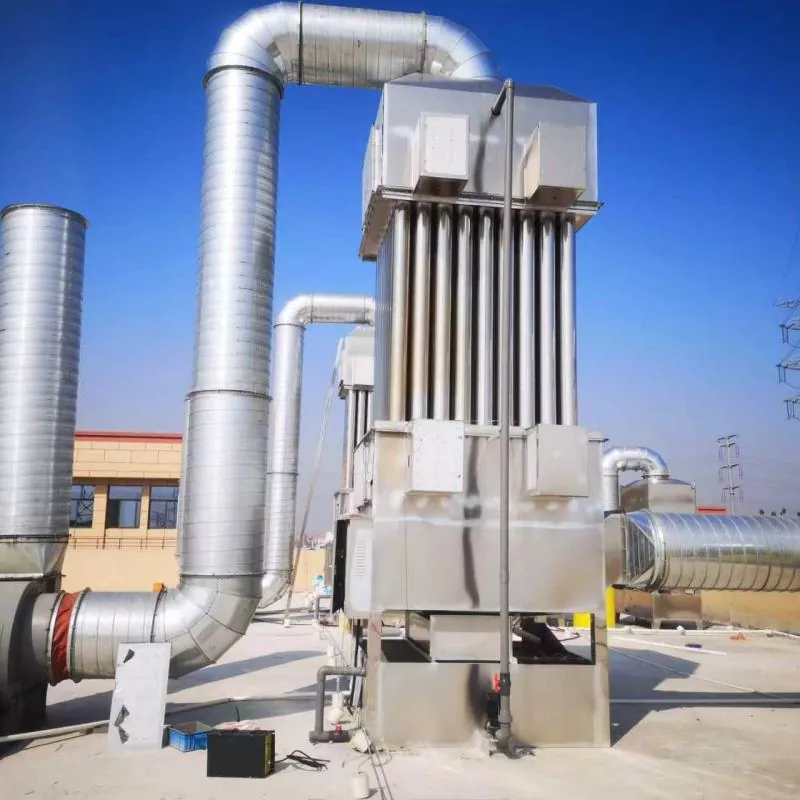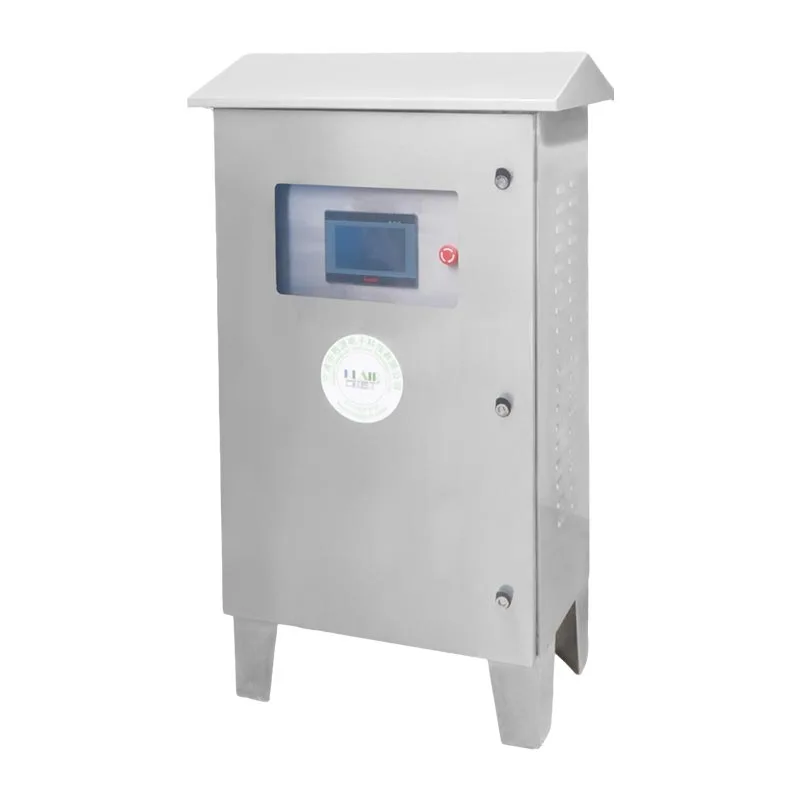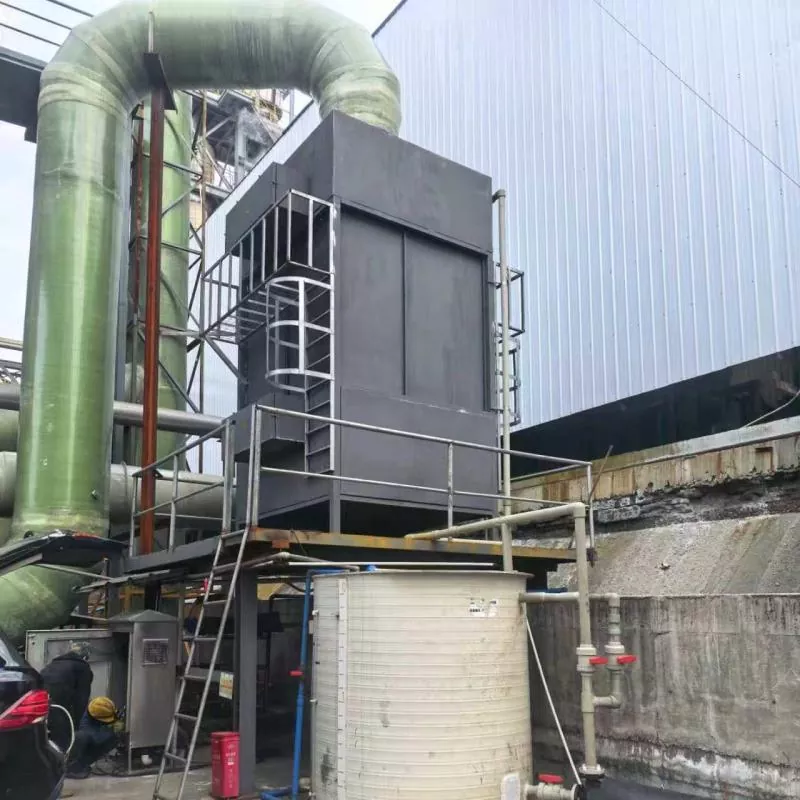
VOC exhaust pretreatment prepares the gas stream for the next treatment stage. Depending on the process, it can involve particle filtration, oil mist separation, cooling, liquid drainage or moisture conditioning. The correct combination depends on the pollutants and the inlet requirements of the downstream equipment. Pretreatment does not automatically remove all gaseous VOCs.
Industrial VOC removal methods: where does pretreatment fit?
Industrial VOC removal methods include adsorption, oxidation, absorption and condensation. Activated carbon retains suitable vapor molecules on its surface; an oxidizer destroys compatible organic compounds; a scrubber transfers selected soluble or reactive compounds into a liquid; and a condenser can recover part of a solvent stream when vapor-liquid conditions make recovery practical.
Each method has an inlet envelope. A prefilter, oil mist separator, cooling section or other upstream stage can help bring the gas closer to that envelope. A broader guide to industrial VOC treatment compares the main technologies. Here the focus is the handoff between the source and the main unit.
What is in the exhaust besides VOC vapor?
Visible haze can contain fine liquid droplets or particles. VOC vapor is a gas-phase pollutant and may not be visible. A stream can contain both, so sampling and equipment selection must distinguish the phases.
| Constituent | Form and example | Question to answer |
|---|---|---|
| Dust or fibers | Solid particles, such as process dust | Can they accumulate in a filter, rotor or heat-exchange media? |
| Oil or paint mist | Liquid droplets suspended in gas | Where will droplets be collected and how will accumulated liquid drain? |
| Water droplets | Entrained liquid or condensate | Is a mist eliminator or drain needed before the next unit? |
| Water vapor | Gas-phase water | Are temperature and humidity suitable at the downstream inlet? |
| VOC vapor | Gas-phase organic compounds | Which compounds are present, and which downstream method can treat them? |
A mist eliminator does not automatically dry the gas or remove every vapor. The U.S. EPA fiber-bed scrubber fact sheet describes capture of fine particles and liquid aerosols and notes limitations for VOCs that are difficult to condense. Its aerosol collection figures should not be used as gas-phase VOC removal figures.
After cooling or wet scrubbing, check both liquid carryover and the temperature at later duct locations. A gas stream that leaves one stage without visible droplets can still produce condensate if it cools further.
Pretreatment before activated carbon, zeolite rotors and RTOs
Before activated carbon VOC removal
Characterize the solvent mixture and identify dust, paint overspray, oil mist and liquid droplets that may reach the carbon. The EPA carbon adsorber chapter includes gas moisture and excessive particulates among factors affecting adsorber design and pretreatment. Check the carbon supplier's inlet limits and compound-specific working capacity under the expected conditions.
Record inlet and outlet VOC measurements, gas flow, inlet temperature, moisture and pressure difference as appropriate to the installation. The EPA carbon monitoring guidance distinguishes outlet VOC and carbon activity from supporting indicators such as inlet moisture and pressure drop. A clean-looking bed does not establish remaining adsorption capacity. Our guide to carbon breakthrough and replacement explains the monitoring decision in more detail.
Before a zeolite rotor concentrator
Screen the stream for fibers, dust, oil mist and sticky condensables that may deposit on upstream filters or the rotor. Check temperature, humidity, VOC composition and the planned desorption conditions against the specific rotor design. A pretreatment filter needs accessible replacement space and a pressure-drop monitoring plan; otherwise a small component can limit the full line's available airflow. See zeolite rotor and RTO system selection for the downstream concentration and oxidation duties.
Before an RTO
Alongside VOC concentration and airflow, review dust, oil aerosols, condensables and compounds that may produce corrosive byproducts. The aim is to decide whether additional separation, temperature control, materials review or downstream gas treatment is needed. Deposits can change resistance through a system, so baseline pressure readings and inspection access matter. The RTO operating guide explains the oxidizer's own temperature and monitoring requirements.
A practical approach to VOC pretreatment
When we review a VOC treatment system, we start at the exhaust source. The first questions are what the process releases, when the release occurs, and which part of the stream could interfere with the equipment downstream.
For a coating line, we check whether paint overspray reaches the duct and how the filters are maintained. For an oil-based process, we look for oil deposits, drainage points and temperature changes along the exhaust route. These observations help us decide where particle or mist separation should be considered before the gas reaches an activated carbon bed, a zeolite rotor or another treatment stage.
We also ask for the production schedule. A single average concentration may hide the effects of cleaning, startup or short production peaks. Airflow, temperature and pollutant composition should be reviewed under the conditions the system is expected to handle, including the periods when emissions are highest.
When a wet scrubber is part of the process, we check what happens at its outlet. A mist eliminator can help separate entrained droplets, but the downstream equipment may also have requirements for temperature and humidity. We therefore review the gas conditions at the inlet of the next stage and provide for drainage where condensation could occur.
For an existing system, we compare pressure drop and airflow with the operating records. We inspect the pretreatment outlet and downstream equipment for deposits or liquid carryover. If carbon replacement becomes more frequent, we check the inlet load and pretreatment condition before attributing the change to the carbon itself.
Our aim is to define a separate duty for each stage. The pretreatment stage protects and conditions the stream. The selected VOC removal stage then addresses the gas-phase compounds it is designed to handle.
Can a VOC scrubber be used as pretreatment?
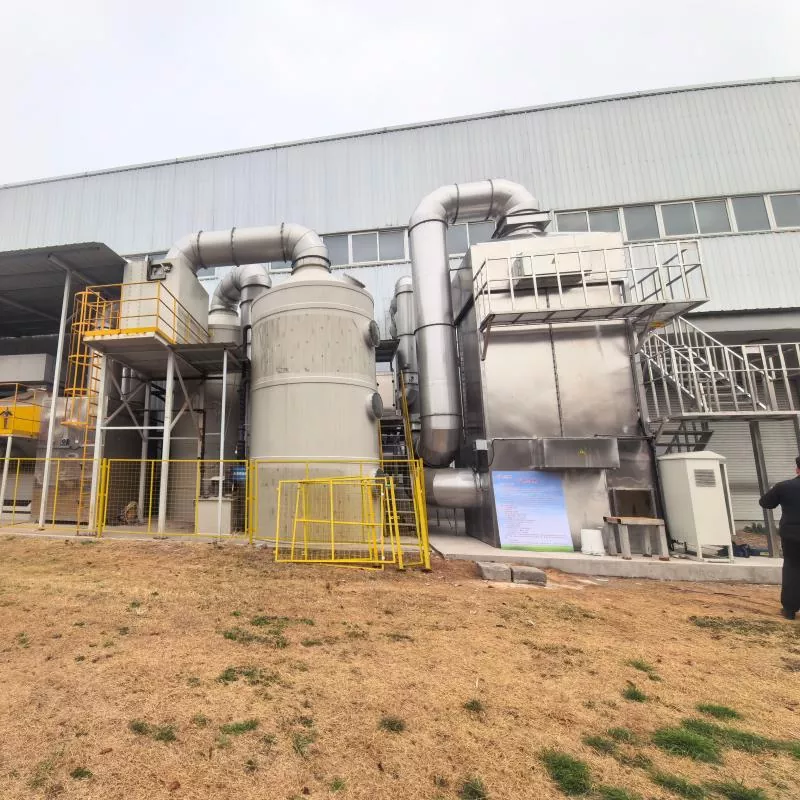
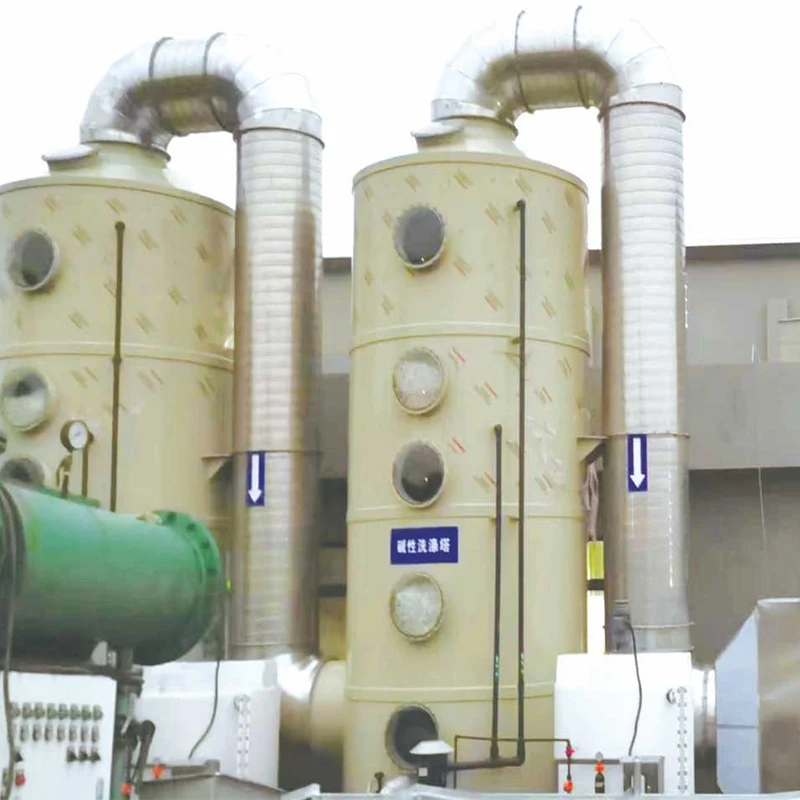
Yes. A water scrubber or other wet scrubber can be part of a VOC treatment train when it has a defined duty, such as treating a suitable soluble gas or handling a compatible particulate load. Its performance depends on the constituent, liquid chemistry, contact conditions and liquid management. A scrubber chosen for an acid gas should not be assumed to remove an unrelated solvent vapor.
What happens after wet scrubbing?
Before connecting a scrubber to an adsorber, check droplet carryover, drainage, gas temperature and moisture at the actual downstream inlet. Mist elimination and humidity conditioning are different tasks. Cooling can also create condensate farther along a duct, so the drainage plan should follow the expected temperature profile.
Scrubbing transfers captured material into liquid. The loop therefore needs a plan for liquid quality, blowdown, treatment or recovery. The EPA monitoring guidance for gaseous scrubbers identifies pressure differential, liquid flow and liquid outlet concentration among performance indicators. In a mixed stream, measure the particular gas or vapor duty separately.
Three treatment train examples for industrial exhaust
These examples show how to assign duties; the order and equipment must be checked against the actual stream, safety review and downstream design.
1. Spray booth exhaust
Capture → paint mist filtration → inlet conditioning if needed → VOC treatment. The upstream filter's job is to intercept overspray before it reaches the selected VOC equipment. Determine its replacement access and pressure-drop range together with the fan and the VOC stage. Assess solvent vapor separately; a paint filter is not a substitute for gas-phase VOC removal.
2. Plastic extrusion or pelletizing exhaust
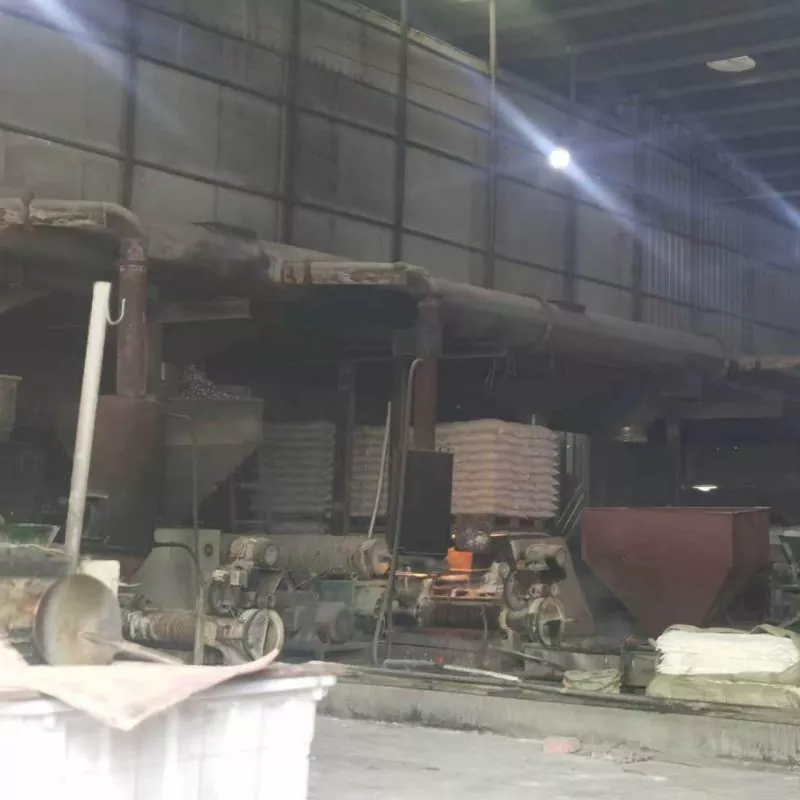
Capture → separation and cooling as needed → oil mist or particle control → VOC or odor treatment where required. Start with the material, operating temperatures and expected emissions. Check whether cooling creates a liquid that can drain rather than collect in the duct. DeFa's plastic pelletizing exhaust equipment is presented for extrusion, compounding and recycling applications, with equipment options including cyclone, wet scrubbing, electrostatic treatment and activated carbon.
3. Wet scrubber followed by carbon
Scrubber → mist elimination and drainage → inlet conditioning if needed → carbon adsorption. First define which pollutant the liquid stage is intended to treat. Then specify the conditions at the carbon inlet, including droplets, humidity, temperature and remaining VOC composition. The separator, drain and any conditioning stage must fit the site's liquid-handling and maintenance arrangements.
Quenching furnace project: pretreatment before odor control
Our published quenching furnace project describes a battery component manufacturer in eastern China operating two batch quenching lines. The exhaust contained oil fume, fine carbon particles and odorous compounds. The original system discharged the exhaust through a roof stack.
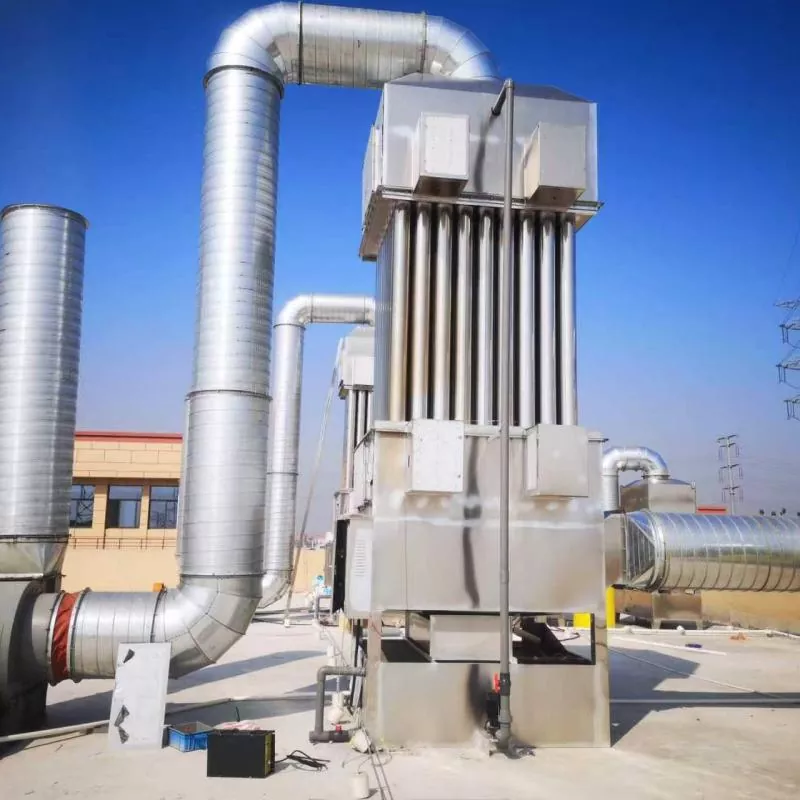
For the treatment train, each line used a capture hood at the quenching tank. The captured exhaust passed through an air-to-air pre-cooler and a cyclone separator before entering a two-zone electrostatic precipitator. An activated carbon stage was added for odor control. The fan and electrostatic equipment were linked to the furnace control system so that their operation followed the quenching cycle.
The stages had different duties. Cooling prepared the hot exhaust for the following equipment. The cyclone and electrostatic stages addressed oil fume and particles before the gas reached the carbon stage. Activated carbon was then used to address the remaining odor-related duty.
According to our quenching system product page, measurements after commissioning showed an outlet particulate concentration below 8 mg/m³ and non-methane total hydrocarbons below 15 mg/m³. These reported outlet results apply to this installation.
The project illustrates why pretreatment should be selected together with the downstream VOC or odor control stage. For another facility, the exhaust composition, batch peaks, temperature and required outlet conditions would need to be assessed before choosing the same arrangement.
VOC odor removal and industrial odor management
Some VOCs are odorous, but an industrial odor may also involve compounds outside the project's VOC measurement. A smell complaint can help locate a source or operating period; it does not identify the chemical mixture or establish an outlet concentration. Likewise, a lower measured VOC concentration does not by itself establish that an odor objective has been met.
Define the VOC and odor objectives separately. Identify when the smell occurs, collect the relevant process and chemical information, and select measurements suited to each objective. In some applications an adsorption or other polishing stage follows oil mist separation, but the selection depends on the compounds remaining after pretreatment.
How to check whether VOC pretreatment is working
Record the pressure difference across each stage together with airflow and operating mode. Compare readings taken under similar production and fan conditions. A higher pressure difference is a useful reason to investigate, but the cause may be accumulated material, changed flow or another restriction. Use the equipment's operating criteria and investigate safely before opening a unit.
| Observation | Check first | Possible explanation |
|---|---|---|
| Filter pressure drop rises | Compare flow, differential pressure and filter condition with baseline. | Loading, sticky deposits or a change in airflow may be involved. |
| Carbon needs replacement sooner | Review inlet VOC load and composition, inlet temperature and moisture, and upstream condition. | The load or inlet conditions may have changed; establish the cause before changing media. |
| Liquid appears after a scrubber | Inspect mist eliminator condition, drains and temperature along the duct. | Droplet carryover or downstream condensation are separate possibilities. |
| Rotor or RTO pressure drop increases | Check upstream filter records and inspect accessible deposits under the equipment procedure. | Deposits, changed flow or internal restrictions may require investigation. |
Use representative sampling points at the process inlet, pretreatment outlet and main unit outlet where appropriate. Check both routine production and relevant peaks. In a wet system, account for collected liquid and blowdown; in a dry system, plan filter and spent-media handling.
What data should you prepare for a VOC treatment proposal?
- Normal and peak airflow, operating hours, batch events and planned future changes.
- VOC compounds and concentration or mass loading, including cleaning or startup peaks.
- Dust, paint overspray, oil mist, visible droplets and corrosive constituents, with available test results.
- Gas temperature and humidity at the source and at each proposed equipment inlet.
- Existing equipment, duct layout, available fan pressure, drainage and maintenance access.
- Applicable outlet requirements, site safety constraints and arrangements for spent media or liquid waste.
Separate measured data from estimates. If only a total VOC number is available, ask what sampling or compound identification is needed before selecting the main removal stage.
Frequently asked questions
Can a prefilter remove VOCs from industrial air?
A particle prefilter is intended to capture suspended particles or droplets according to its design. It should not be assumed to remove gas-phase VOCs. A separately selected adsorption, oxidation, absorption or recovery stage may be needed for the vapor.
Can a VOC scrubber remove every solvent?
No. Removal depends on the solvent, the selected liquid, contact conditions and liquid loading. Some compounds may need another treatment or recovery stage after scrubbing.
Does a mist eliminator remove water vapor?
A mist eliminator separates entrained liquid droplets. It does not by itself establish a required water-vapor concentration or relative humidity; evaluate those conditions separately at the downstream inlet.
Can one pretreatment system protect activated carbon and an RTO?
A shared stage may be useful if it addresses contaminants that matter to both units, but each unit has its own inlet and safety requirements. Review the full flow, temperature, contaminant and operating range before deciding on shared equipment.
How do I know when a pretreatment filter needs maintenance?
Follow the equipment's operating instructions and compare differential pressure, airflow, production conditions and inspection records with the established baseline. The appropriate service point depends on the filter, captured material and system design.
Discuss your VOC pretreatment requirements
DeFa supplies industrial exhaust treatment equipment, including dust collection, wet scrubbing, oil mist purification, activated carbon and combined VOC treatment equipment. Share the exhaust composition, airflow, temperature, humidity and operating schedule so the treatment stages can be evaluated together.