How Can a Rectangular Air Volume Control Damper Improve HVAC Efficiency and Airflow Precision
DeFa provides practical airflow regulation solutions for HVAC, industrial ventilation, and cleanroom applications. A well-selected Rectangular Air Volume Control Damper helps engineers balance duct airflow, manage ventilation zones, and maintain more consistent operating conditions. With manual and motorized configurations, customizable dimensions, and multiple material options, this component can be adapted to diverse project requirements while supporting reliable airflow management.
A rectangular air volume control damper is an essential component in square and rectangular duct systems. It regulates the amount of air passing through a duct by adjusting internal blades, helping ventilation engineers balance airflow and control distribution across different areas. This guide explains how the damper works, its key specifications, material choices, manual and motorized operation, installation considerations, and maintenance requirements. It also provides a practical selection checklist for contractors, HVAC designers, facility managers, and industrial equipment buyers.
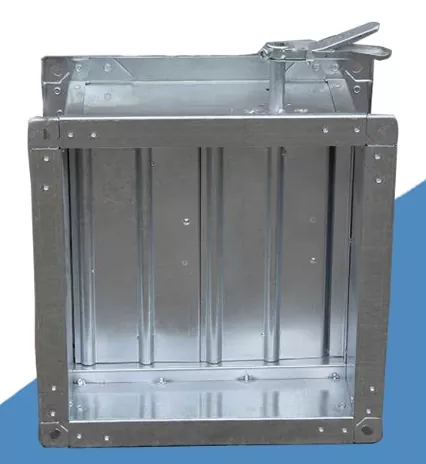
Table of Contents
What Is a Rectangular Air Volume Control Damper?
Why Does Airflow Control Matter in HVAC Systems?
What Specifications Should Buyers Evaluate?
How Do You Choose the Right Damper Material?
Manual vs. Motorized: Which Control Method Is Better?
Where Are Rectangular Air Volume Control Dampers Used?
How Can Proper Installation and Maintenance Improve Performance?
What Should You Confirm Before Purchasing?
Conclusion: Choosing a Suitable Airflow Control Solution
What Is a Rectangular Air Volume Control Damper?
A rectangular air volume control damper is a mechanical airflow regulation device installed inside a rectangular or square ventilation duct. It uses adjustable blades to change the effective air passage area, allowing operators to increase, decrease, or balance airflow according to system requirements.
Unlike a component designed exclusively for complete shut-off, a volume control damper is primarily used to regulate airflow and support system balancing. Depending on its design, it may contain a single blade or multiple linked blades that move together through a manual mechanism or electric actuator.
DeFa offers configurations covering standard dimensions from 100 × 100 mm to 1000 × 1000 mm, with customized sizes available within manufacturing limits. Depending on the project, buyers can also specify different materials, connection types, blade arrangements, and control options.
For HVAC contractors and industrial ventilation engineers, selecting the appropriate damper at the design stage helps align the physical duct layout with the required airflow distribution and control strategy.
Why Does Airflow Control Matter in HVAC Systems?
Airflow distribution affects indoor comfort, ventilation quality, pressure balance, and the performance of connected air-handling equipment. If duct branches are not balanced correctly, some rooms may receive excessive airflow while others experience insufficient ventilation.
A properly selected Rectangular Air Volume Control Damper allows technicians to adjust individual duct branches during commissioning and helps maintain the intended distribution of air throughout the system.
Key operational benefits
- Airflow balancing: Adjusts the volume of air delivered through individual duct branches.
- Zone regulation: Helps distribute conditioned or fresh air according to the requirements of different spaces.
- Flexible operation: Motorized models can adjust airflow in response to control-system commands.
- Commissioning support: Manual adjustment provides a straightforward way to establish initial airflow settings.
- System integration: Compatible electric actuators can support automated ventilation strategies when correctly specified.
- Maintenance accessibility: A suitably installed damper provides a practical point for inspection and airflow adjustment.
It is important to recognize that a damper alone does not guarantee energy savings or adequate ventilation. Actual results depend on duct design, fan performance, system pressure, control logic, commissioning quality, and operating conditions.
What Specifications Should Buyers Evaluate?
Choosing a damper involves more than matching the duct opening. Buyers should review dimensions, working pressure, temperature, material compatibility, blade construction, actuator requirements, connection details, and the required leakage performance.
| Specification | DeFa Configuration | Selection Consideration |
|---|---|---|
| Standard dimensions | 100 × 100 mm to 1000 × 1000 mm | Confirm duct width, height, and installation clearance. |
| Custom dimensions | Available within manufacturing limits | Provide a drawing for non-standard openings. |
| Frame materials | Carbon steel, 201, 304, or 316 stainless steel | Match corrosion resistance to the operating environment. |
| Blade construction | Single blade or multi-blade design | Consider dimensions, rigidity, and airflow requirements. |
| Control method | Manual handle, hand wheel, or electric actuator | Choose according to adjustment frequency and automation needs. |
| Actuator voltage | 24V AC/DC, 220V AC, or other options on request | Confirm compatibility with the available power supply. |
| Control signal | 0–10V DC, 4–20mA, or three-point floating | Match the building management or industrial control system. |
| Standard working pressure | Up to 1000 Pa | Confirm actual operating and differential pressure. |
| Standard temperature range | -20°C to +70°C | Check actual air temperature and environmental conditions. |
| Leakage classification | Class 1 to Class 3, subject to the specified standard | Define the required leakage performance for the application. |
| Connection options | Flanged, slip-fit, or angle flange as required | Coordinate the connection with the existing ductwork. |
| Actuator protection | IP42 for indoor use; IP54 or higher options | Select suitable protection for outdoor or wet locations. |
These are published configuration ranges rather than a guarantee that every combination is available in every size. Buyers should confirm the final specification with DeFa before ordering. Leakage classification should also be evaluated against the applicable test standard and the project's acceptance criteria.
How do dimensions affect damper selection?
The damper frame must fit the designated duct opening without obstructing adjacent equipment or restricting access to the actuator. For larger dimensions, multi-blade construction and reinforced components may be required to control blade deflection and provide sufficient operating torque.
For example, a 300 × 300 mm duct and an 800 × 800 mm duct may require different blade arrangements and actuator capacities even when both serve the same general ventilation purpose. The appropriate design depends on pressure, airflow, construction, and operating conditions.
How Do You Choose the Right Damper Material?
Material selection affects corrosion resistance, service life, maintenance requirements, and the suitability of the damper for its installation environment. The best choice depends on exposure to humidity, cleaning chemicals, corrosive gases, salt, and other environmental factors.
| Material | Typical Application | Important Consideration |
|---|---|---|
| Carbon steel | General indoor ventilation and air conditioning | Galvanized or coated finishes provide additional protection. |
| 201 stainless steel | Moderately humid environments and selected general exhaust systems | Verify suitability against actual corrosion exposure. |
| 304 stainless steel | Humid facilities, coastal buildings, and food-processing environments | Offers good general corrosion resistance and cleanability. |
| 316 stainless steel | Marine environments and selected chemical exhaust applications | Often preferred where chloride exposure or more aggressive corrosion is expected. |
Additional factors to consider
- Confirm whether the frame and blades require the same material or different materials.
- Evaluate the effect of condensation, cleaning agents, and airborne contaminants.
- Specify galvanized, painted, powder-coated, or stainless steel finishes where appropriate.
- Check compatibility with applicable hygiene, industrial safety, and project requirements.
- For aggressive chemical exhaust, verify material compatibility with the actual chemical composition and concentration.
For applications involving high humidity or corrosive air, choosing a material based on the real operating environment is more reliable than selecting solely by initial purchase price.
Manual vs. Motorized: Which Control Method Is Better?
The appropriate control method depends on whether airflow must remain relatively stable or change automatically during operation. DeFa's rectangular damper configurations support manual and electric control options, with certain actuator models offering local manual override.
Manual dampers
A manual damper uses a locking quadrant handle or hand wheel to change the blade position. Once the required airflow is established, the position can be secured to reduce unintended movement.
- Suitable for balancing during system commissioning.
- Does not require electrical power for adjustment.
- Offers a relatively simple control arrangement.
- Requires physical access when the airflow setting needs to change.
Motorized dampers
A motorized damper uses an electric actuator mounted on the damper shaft. Depending on the selected actuator, it can provide two-position operation or modulating adjustment through a compatible control signal.
- Suitable for systems requiring scheduled or automatic airflow changes.
- Can integrate with compatible building management systems and industrial controllers.
- Supports remote adjustment when the control system is configured accordingly.
- Requires suitable power, control wiring, actuator torque, and maintenance access.
Comparison of control methods
| Factor | Manual Control | Motorized Control |
|---|---|---|
| Adjustment | Performed by an operator | Performed by an actuator |
| Power requirement | No electrical power for manual movement | Requires a compatible power supply |
| Automation | Limited | Available with suitable control integration |
| Typical use | Fixed or infrequently adjusted airflow | Variable airflow or automated zone control |
| Key selection factor | Accessibility and locking mechanism | Torque, voltage, signal, and control logic |
Before ordering a motorized Rectangular Air Volume Control Damper, confirm the actuator voltage, signal type, control direction, operating torque, and any required feedback or fail-safe function. These details should be coordinated with the project control drawings.
Where Are Rectangular Air Volume Control Dampers Used?
Rectangular dampers are suitable for a range of air distribution and ventilation systems where adjustable airflow is required. Their final configuration should be determined by the application, operating conditions, and relevant engineering standards.
- Commercial buildings: Balance airflow between offices, meeting rooms, corridors, and shared facilities.
- Industrial ventilation: Regulate air distribution in workshops, production areas, and general exhaust networks.
- Cleanrooms: Support designed airflow distribution when integrated into a properly engineered environmental control system.
- Food-processing facilities: Provide adjustable ventilation using materials appropriate for humidity and cleaning conditions.
- Laboratories: Regulate selected ventilation branches where the material and leakage requirements are appropriate for the application.
- Air-handling systems: Help commission and balance duct networks serving heating, ventilation, and air-conditioning equipment.
Applications involving hazardous fumes, strict containment, fire protection, or smoke control may require specialized dampers and independently verified performance. A standard volume control damper should not be substituted for a certified fire or smoke damper where regulations require dedicated equipment.
How Can Proper Installation and Maintenance Improve Performance?
Even a correctly specified damper can perform poorly if it is installed in a distorted frame, connected incorrectly, or left without suitable maintenance access. Installation should follow the approved drawings, manufacturer instructions, and applicable ductwork standards.
Installation recommendations
- Verify the duct opening: Check width, height, orientation, and the specified connection dimensions before installation.
- Choose an appropriate location: Where practical, install the damper in a straight duct section and follow the project's airflow measurement requirements.
- Maintain access: Provide enough clearance for handle movement, actuator servicing, and inspection.
- Secure the connections: Tighten flange bolts evenly to help prevent frame distortion and unwanted leakage.
- Check actuator operation: Verify the rotation direction, control signal, and full blade travel before closing access panels.
- Balance the system: Measure airflow under operating conditions and adjust the damper according to the commissioning procedure.
Maintenance checklist
| Inspection Frequency | Recommended Task |
|---|---|
| Quarterly | Inspect blade movement, remove accumulated dust, and check blade-edge seals. |
| Every six months | Check bearings, fasteners, actuator mounting, and signs of wear or corrosion. |
| Annually | Test the full operating stroke, verify control response, and assess worn seals or damaged components. |
| As conditions require | Inspect more frequently in dusty, humid, corrosive, or heavily used systems. |
These intervals are a general maintenance starting point, not a universal requirement. Actual schedules should follow the operating environment, equipment instructions, and facility maintenance plan.
What Should You Confirm Before Purchasing?
Preparing a clear technical specification helps suppliers evaluate feasibility and reduces the risk of ordering a damper that does not match the ductwork or control system.
Before requesting a quotation from DeFa, prepare the following information:
- Required duct width and height, including units and dimensional tolerances.
- Frame and blade material, surface finish, and corrosion-resistance requirements.
- Manual or motorized operation, including any manual override requirements.
- Actuator voltage, control signal, torque, and feedback requirements, if applicable.
- Operating pressure, air temperature, airflow conditions, and leakage-class requirements.
- Connection type, flange details, installation orientation, and available clearance.
- Quantity, delivery destination, required delivery date, and any inspection documentation.
- Technical drawings or photographs of the existing duct connection, where available.
DeFa states that standard configurations commonly have a delivery lead time of approximately 7–15 working days. Customized dimensions, special materials, and non-standard configurations may require additional production time. Confirm the delivery schedule and final specifications with the supplier before placing an order.
Frequently Asked Questions
1. Can DeFa manufacture a custom rectangular air volume control damper?
Yes. Custom dimensions are available within manufacturing limits. Provide the required width, height, material, connection type, blade configuration, and control requirements so the technical team can assess the design.
2. What is the standard size range?
DeFa lists standard sizes from 100 × 100 mm to 1000 × 1000 mm. Other dimensions may be available on request, subject to design feasibility and manufacturing requirements.
3. Which material is best for humid or corrosive environments?
304 stainless steel is commonly considered for humid environments, while 316 stainless steel may be more appropriate for chloride exposure or certain aggressive chemical conditions. Final selection should be based on the actual environment and compatibility requirements.
4. Can a motorized damper connect to a building management system?
Yes, when the selected actuator and control system are compatible. Available signal options include 0–10V DC, 4–20mA, and three-point floating control. Confirm voltage, signal type, actuator torque, and control logic before ordering.
5. What is the maximum standard working pressure?
The published standard working pressure is up to 1000 Pa, with higher ratings available for discussion on request. Confirm the required operating and differential pressure for the specific project.
6. Can a rectangular volume control damper provide complete airtight shut-off?
Not necessarily. Performance depends on blade design, seals, frame construction, and the specified leakage class. If airtight isolation or certified fire and smoke performance is required, specify the relevant acceptance criteria and confirm that the selected product is designed and tested for that purpose.
7. How long does delivery usually take?
Standard configurations are commonly quoted at approximately 7–15 working days. Special materials, custom sizes, order quantities, and production schedules can affect lead time. Request a project-specific delivery estimate before confirming the purchase.
8. What information is needed to receive an accurate quotation?
Provide the dimensions, material, control method, actuator voltage and signal, working pressure, leakage requirements, connection details, and quantity. Drawings and installation information are useful for non-standard configurations.
Conclusion: Choosing a Suitable Airflow Control Solution
A properly selected Rectangular Air Volume Control Damper helps HVAC designers and facility operators regulate duct airflow, balance ventilation branches, and support effective zone management. Dimensions, material compatibility, blade construction, working pressure, leakage performance, and actuator specifications should all be evaluated before procurement.
DeFa offers manual and motorized configurations, multiple steel options, customized dimensions, and connection choices for different ventilation requirements. By preparing clear technical specifications and confirming installation conditions in advance, buyers can make a more informed decision and reduce avoidable commissioning or maintenance issues.
Looking for a dependable rectangular damper solution for your next HVAC or industrial ventilation project? Visit the DeFa Rectangular Air Volume Control Damper product page to review available configurations. Share your drawings, dimensions, material preferences, and control requirements with the DeFa team. Contact us today to discuss your project, request a customized quotation, and identify a suitable airflow control solution for your application.
Related News
- Industrial VOC Removal: How Pretreatment Protects Activated Carbon, Zeolite Rotors and RTO Systems
- How Can an Acidic Waste Gas Treatment System Improve Industrial Safety and Emission Control
- How Can a Quenching Furnace Oil Fume Purification System Improve Industrial Air Quality and Production Efficiency
- How Can High-Viscosity Oil Fume Purification Equipment Improve Industrial Air Quality and Production Efficiency
- Can a Wet Scrubber Remove VOCs? A Practical Selection and Troubleshooting Guide
- How Can an Intelligent Purification Power Supply and Control System Assembly Transform Industrial Air Pollution Control
Leave me a message