DeFa provides a compact DC High Voltage Module designed to convert low-voltage DC input into stable high-voltage DC output for air purifiers, ionizers, plasma devices, electrostatic precipitation systems, and other low-power air treatment equipment. With 5V or 12V input, 5–9kV output options, a compact 51 × 32 × 19 mm footprint, and integrated protection functions, this module is suitable for equipment designers looking for a space-efficient high-voltage power solution.
A high-voltage source does not always need to be large, complex, or difficult to integrate. Modern air purification, ionization, plasma, and electrostatic devices increasingly require compact power components that can deliver stable voltage while fitting inside space-constrained equipment. A well-designed DC High Voltage Module converts low-voltage DC power into a controlled high-voltage output, providing the electrical energy required by electrodes, ionizers, electrostatic collectors, or small plasma cells.
DeFa's module supports DC 5V or DC 12V input and model-dependent 5kV to 9kV DC output. Its rated power consumption is up to 3W, while the typical output current is limited to ≤0.5mA. The encapsulated structure, configurable wiring, short-circuit protection, overcurrent limiting, and open-load protection make it practical for OEM equipment integration.
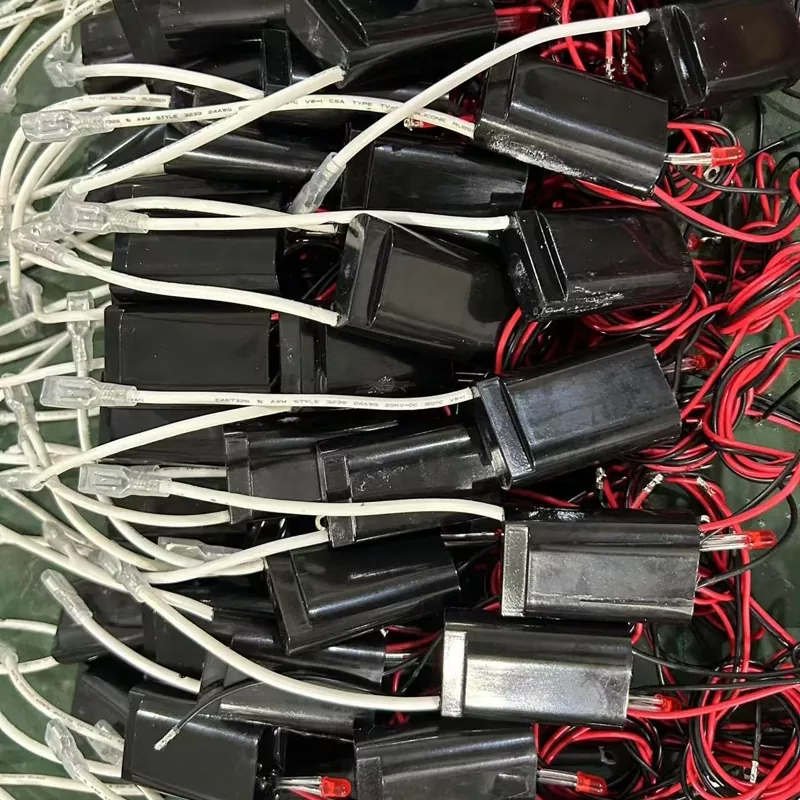
Table of Contents
- What Is a DC High Voltage Module?
- How Does a DC High Voltage Module Work?
- Key Specifications and Design Parameters
- Where Are High Voltage DC Modules Used?
- What Should Engineers Consider During Integration?
- Key Advantages for OEM Equipment
- How to Select the Right Module?
- Frequently Asked Questions
- Conclusion
What Is a DC High Voltage Module?
A DC high-voltage module is a compact power-conversion component that transforms a relatively low DC input into a much higher DC output voltage. Instead of designing a high-voltage circuit from individual transformers, switching components, rectifiers, protection circuits, and insulation structures, equipment manufacturers can integrate a dedicated high-voltage module into the host product.
This architecture is particularly useful where installation space is limited. DeFa's module measures only 51 × 32 × 19 mm and weighs approximately 25 g, allowing it to be integrated into portable air purifiers, desktop ionizers, car air fresheners, sanitizing devices, HVAC accessories, and other compact equipment.
The output can be configured according to the selected model, with available voltage levels from 5kV to 9kV. Depending on the application, the high-voltage output can be used for negative-ion generation, electrostatic precipitation, or small plasma-generation systems.
How Does a DC High Voltage Module Work?
The basic operating principle is a multi-stage voltage-conversion process. A low-voltage DC input first drives an oscillator or switching circuit. This circuit energizes the primary side of a step-up transformer. The transformer increases the voltage, after which a rectifier circuit converts the transformed electrical signal into high-voltage DC.
The output circuit is designed with current-limiting characteristics so that the module can provide high voltage without requiring high output power. This distinction is important because many ionization and electrostatic applications need a high electric field rather than a large amount of electrical current.
- Input stage: Receives DC 5V or DC 12V power.
- Oscillation stage: Generates the switching signal required by the transformer.
- Step-up stage: Raises the low input voltage to a high voltage.
- Rectification stage: Produces the required high-voltage DC output.
- Protection stage: Helps limit abnormal current and protect the circuit during fault conditions.
This compact architecture makes a dedicated high-voltage module easier to integrate than building a complete high-voltage power circuit from scratch.
Key Specifications and Design Parameters
Before choosing a high-voltage power module, engineers should evaluate input compatibility, output voltage, power consumption, physical dimensions, wiring, temperature range, insulation, and protection functions. The following table summarizes the principal specifications of the DeFa solution.
| Parameter | Specification | Engineering Consideration |
|---|---|---|
| Input Voltage | DC 5V or DC 12V ±10% | Compatible with many low-voltage electronic systems |
| Output Voltage | 5kV–9kV DC | Selected according to electrode and application requirements |
| Rated Power | Up to 3W | Suitable for compact, low-power applications |
| Output Current | Typically ≤0.5mA | Internally limited for the intended application range |
| Dimensions | 51 × 32 × 19 mm | Useful for space-constrained equipment |
| Weight | Approx. 25g | Helps minimize added equipment weight |
| Operating Temperature | -10°C to +60°C | Suitable for a broad range of indoor equipment conditions |
| Protection | Overcurrent, short-circuit and open-load protection | Helps improve system-level reliability |
| Output Connection | High-voltage wire lead | Lead length can be configured for equipment integration |
For detailed technical selection, engineers should match the module's electrical characteristics with the electrode geometry, load condition, insulation distance, enclosure design, and operating environment of the final product.
Where Are High Voltage DC Modules Used?
The compact form factor and low-power design of a high-voltage module make it suitable for multiple electrostatic and air-treatment applications.
Air Purification Equipment
In electrostatic air purification systems, high voltage creates an electric field that supports particle charging and collection. The module can also power negative-ion generation components used as part of an air-treatment design.
Negative Ion Generators
Desktop ionizers, portable air fresheners, and other compact ion-generation devices require a high-voltage source without adding a large power-supply assembly. A small DC high-voltage converter can simplify this integration.
Plasma Devices
Small plasma systems can require a controlled high-voltage source to establish the electrical conditions needed by the plasma cell. Depending on the design, the module can support compact plasma generators used for odor treatment or surface-related applications.
HVAC and Air Treatment Accessories
High-voltage modules can also be integrated into fan-coil units, duct-mounted ionizers, and other continuous air-treatment accessories where available installation space is limited.
Medical and Laboratory Equipment
Low-power air-cleaning and specialized disinfection equipment can use compact high-voltage power supplies where the electrical requirements match the module's specifications and the finished equipment incorporates appropriate safety measures.
What Should Engineers Consider During Integration?
High-voltage components require more than electrical compatibility. Mechanical layout, insulation, wiring, thermal conditions, electromagnetic interference, and user protection all need to be considered during product development.
- High-voltage clearance: Maintain appropriate spacing between the high-voltage output and conductive components.
- Insulation: Use suitable insulating materials around the high-voltage terminal and wiring.
- Enclosure design: The high-voltage section should not be accessible during normal operation.
- Thermal management: Keep the module within its specified operating temperature range.
- Wiring: Select suitable high-voltage insulated cable and specify the required lead length.
- EMC: Sensitive electronic systems may require shielding, filtering, or careful cable routing.
- Electrode geometry: Electrode spacing and shape influence the voltage requirement and electrical behavior.
The module's encapsulated construction isolates the high-voltage output from the low-voltage input. Nevertheless, final equipment designers remain responsible for implementing the appropriate insulation, enclosure, grounding, and safety architecture for the finished product.
What Are the Key Advantages for OEM Equipment?
For OEM manufacturers, a compact high-voltage module can reduce development complexity while making the overall product easier to package.
- Compact mechanical footprint: The 51 × 32 × 19 mm dimensions allow installation in relatively small housings.
- Low input power requirement: A rated consumption of up to 3W supports low-power system architectures.
- Multiple voltage options: Available models cover 5kV through 9kV output requirements.
- Configurable connections: High-voltage lead length and connector arrangements can be specified according to the equipment design.
- Protection functions: Overcurrent limiting, short-circuit protection, and open-load protection are incorporated into the module.
- OEM adaptability: Input voltage, output voltage, polarity, housing, mounting, and wiring can be evaluated for project-specific requirements.
How Should You Select the Right DC High Voltage Module?
Choosing the correct module starts with defining the electrical load rather than simply selecting the highest available voltage. A higher voltage is not automatically better because electrode spacing, air conditions, insulation, ozone considerations, and application objectives all affect system performance.
For negative-ion applications, lower output-voltage models may be appropriate depending on electrode design. Electrostatic precipitation systems with wider electrode or collector spacing may require higher voltage. Plasma applications should be evaluated according to the electrical characteristics of the specific discharge cell.
A practical selection checklist includes:
- Confirm whether the host system provides DC 5V or DC 12V input.
- Determine the required output voltage based on electrode spacing and application design.
- Confirm the required polarity: positive or negative.
- Calculate the available power budget of the host equipment.
- Check the physical installation space.
- Define the required high-voltage cable length and connector arrangement.
- Evaluate operating temperature and enclosure conditions.
- Consider EMC requirements if sensitive electronics are installed nearby.
For OEM projects, providing these details to the supplier at the quotation stage can make technical matching faster and reduce unnecessary prototype iterations.
Frequently Asked Questions About DC High Voltage Modules
Can the output voltage be adjusted while the module is operating?
The standard module uses a factory-defined output voltage according to the selected model. If an application requires variable output voltage, engineers should discuss a customized module or an external control solution during the design stage.
How do I choose between 5kV and 9kV output?
The required voltage depends primarily on the electrode configuration and application. Negative-ion applications may commonly use 5kV–7kV, while electrostatic systems with larger electrode gaps may require 8kV–9kV. The complete electrode and load configuration should be evaluated before selecting a model.
Does a high-voltage module generate ozone?
The module itself is a power-conversion component rather than an ozone generator. However, ozone can potentially form when high voltage is applied to sharp electrodes in air, particularly at higher voltages. Electrode geometry, voltage level, and system design should therefore be considered when ozone control is important.
Can it be used in household appliances?
The module is designed with limited output current and encapsulated insulation, but the final appliance still needs appropriate electrical insulation, grounding, enclosure, and safety engineering. The high-voltage terminal and wiring should not be accessible to users during normal operation.
What is the expected service life?
Under normal operating conditions and within the specified temperature range, the module has an expected service life of more than 20,000 hours. Excessive input voltage and prolonged operation at maximum temperature can affect service life, so proper thermal and electrical management is recommended.
Are samples available for prototype testing?
Yes. Sample orders can be used for prototype evaluation. When requesting a sample, it is useful to specify the required input voltage, output voltage, polarity, and high-voltage lead length so the appropriate configuration can be evaluated.
Conclusion: Is a Compact High-Voltage Module Right for Your Equipment?
A compact high-voltage power supply can be an important building block for air purification, ionization, electrostatic precipitation, plasma generation, HVAC accessories, and other low-power high-voltage applications. The key is not simply obtaining a high voltage, but matching output voltage, current limitation, polarity, mechanical dimensions, wiring, insulation, and operating conditions with the final equipment design.
With 5V or 12V DC input, 5–9kV DC output options, up to 3W rated power consumption, a 51 × 32 × 19 mm compact structure, configurable wiring, and integrated protection functions, DeFa's solution provides OEM developers with a practical starting point for compact high-voltage system integration. If you are developing an air purifier, ionizer, plasma device, electrostatic system, or other equipment requiring a compact high-voltage source, explore the DC High Voltage Module specifications and contact us with your required input voltage, output voltage, polarity, load configuration, and installation requirements for technical evaluation.