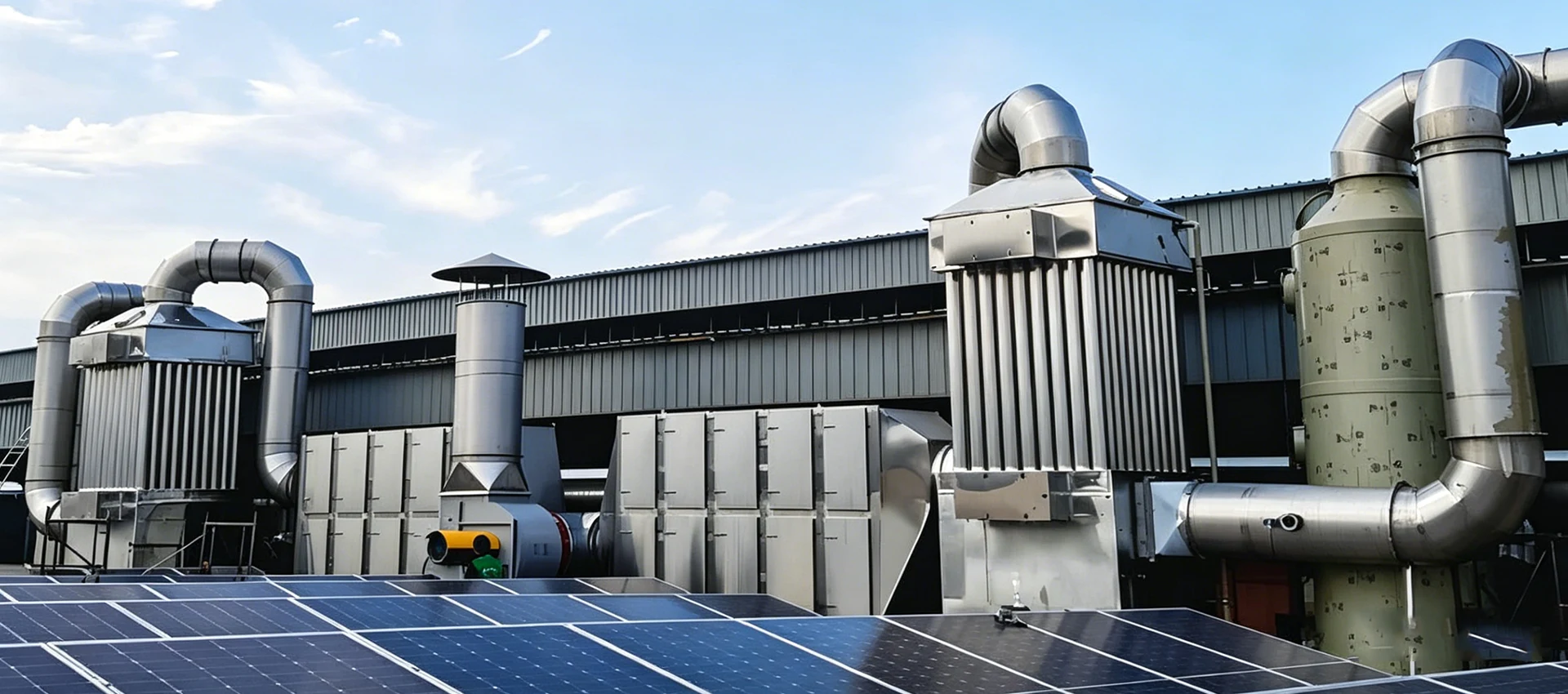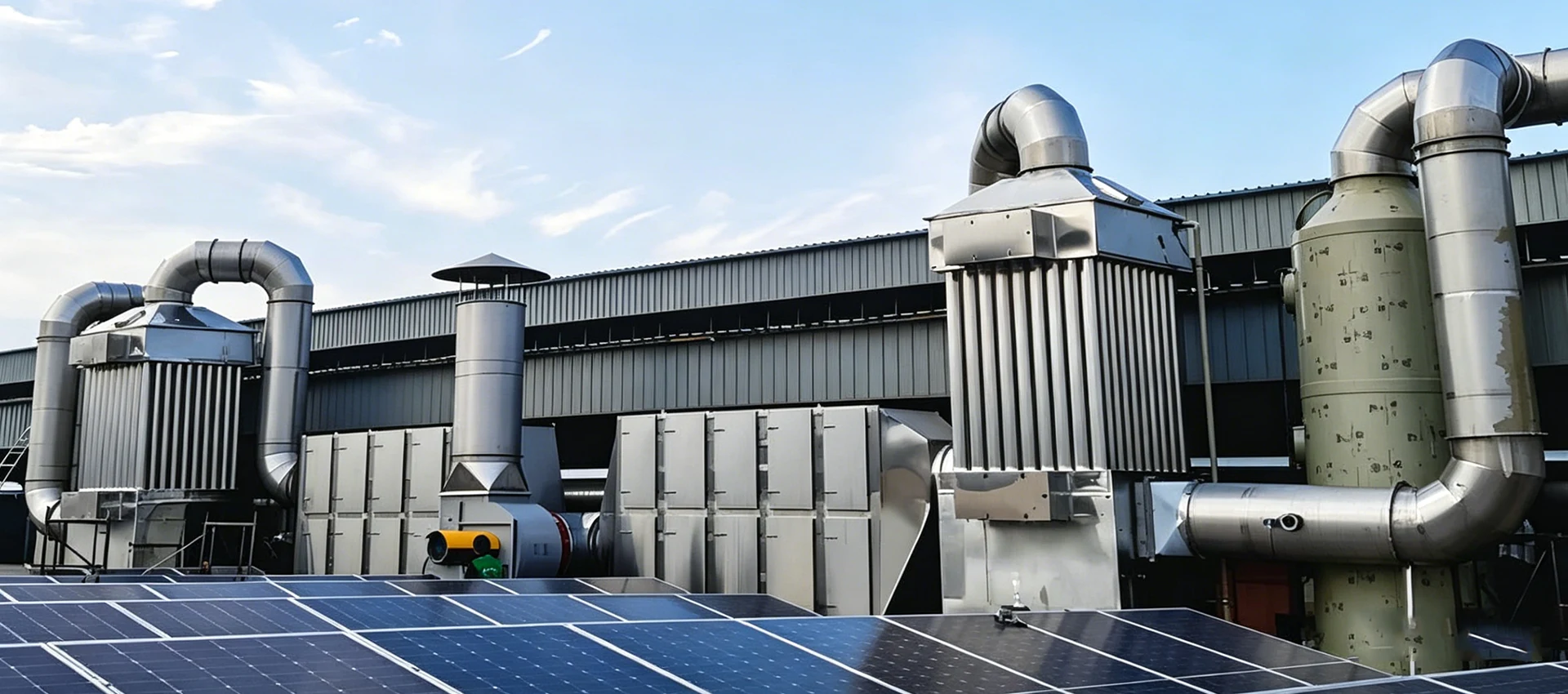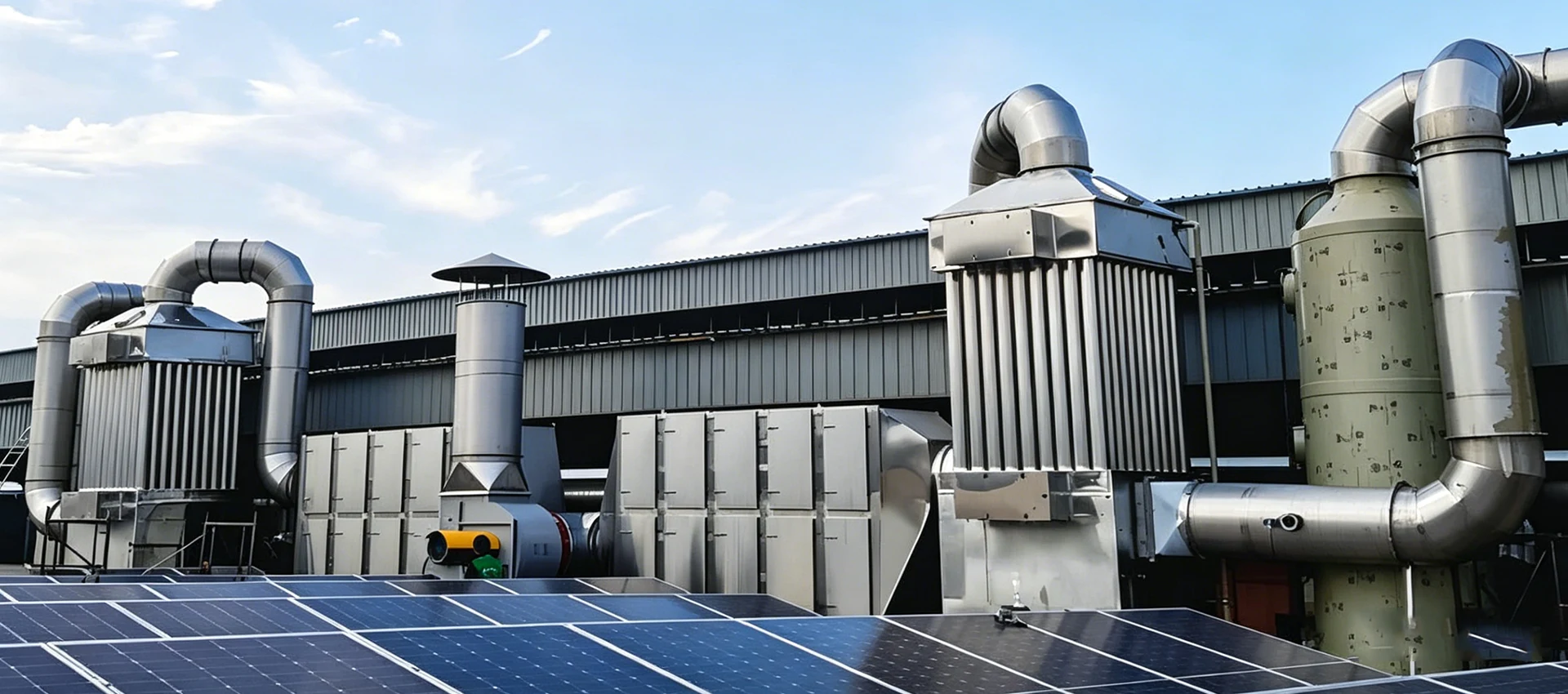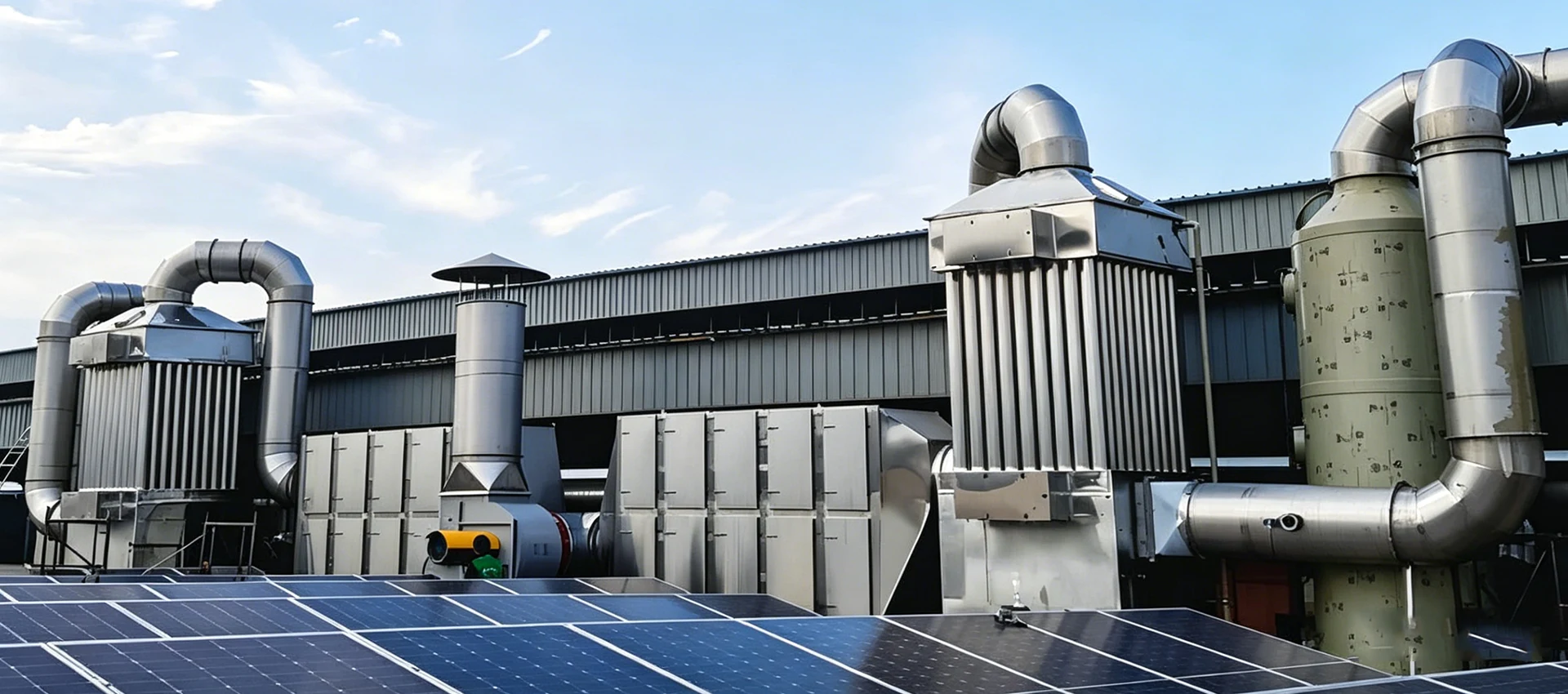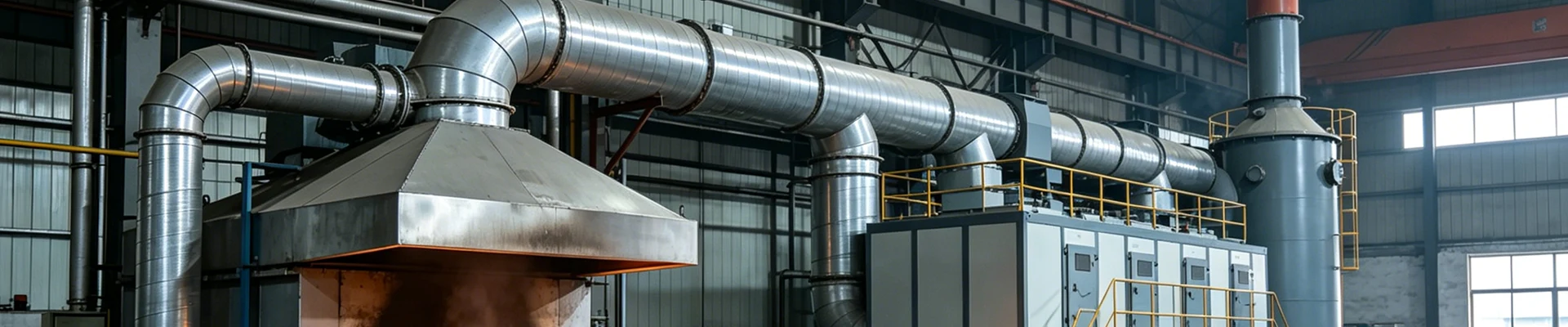
Acidic Waste Gas Treatment System
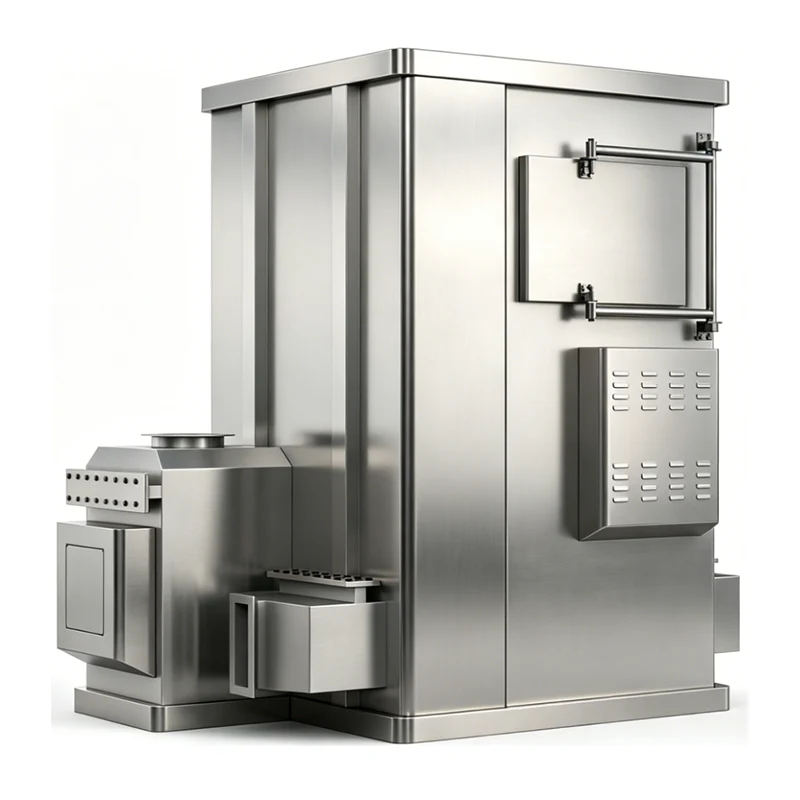
DeFa Acidic Waste Gas Treatment System uses multi-stage wet scrubbing to remove HCl, HF, sulfuric acid mist, and mixed acid vapors from lithium battery, electroplating, pickling, and chemical processes. **Buy, source, or order** customized systems with PP, PVDF, or FRP construction.
Acidic waste gas is generated in processes such as lithium battery cathode material production, electroplating, metal pickling, chemical synthesis, and semiconductor manufacturing. The main pollutants include hydrogen chloride (HCl), sulfuric acid mist (H₂SO₄), hydrofluoric acid (HF), nitric acid mist (HNO₃), and mixed acid vapors. These gases are corrosive to equipment, harmful to human respiratory systems, and subject to strict emission limits. The DeFa acidic waste gas treatment system is designed to capture and neutralize these pollutants through multi-stage wet scrubbing. It is manufactured by Shengyuan Technology under the DeFa brand.
The system uses alkaline absorption as the primary treatment mechanism, combined with oxidation or reduction stages where needed for specific acid components. It can be configured for continuous operation in high-humidity and corrosive environments. Typical applications include cathode material calcination exhaust, electrode coating drying exhaust, pickling line exhaust, and laboratory fume hood discharge.
Treatment Principle
Absorption Chemistry
Acidic gases are absorbed into a circulating alkaline solution. The most common neutralization reactions are:
- HCl + NaOH → NaCl + H₂O
- H₂SO₄ + 2NaOH → Na₂SO₄ + 2H₂O
- HF + NaOH → NaF + H₂O
- HNO₃ + NaOH → NaNO₃ + H₂O
For gases that are difficult to absorb directly, such as NOₓ, a reducing or oxidizing agent can be added to the scrubbing liquor to convert them into more soluble forms. The reaction products remain in the circulating water and are discharged periodically to a wastewater treatment system.
Multi-Stage Scrubbing
A single scrubbing stage is often insufficient for mixed acid streams or high inlet concentrations. The DeFa system uses two or three scrubbing stages in series:
- First stage: Primary neutralization. The gas contacts an alkaline spray or packed bed where the majority of strong acids are absorbed.
- Second stage: Polishing absorption. A second packed bed or spray chamber removes residual acid mist and fine droplets.
- Third stage (optional): Demisting or specialized treatment. A mist eliminator captures entrained droplets, or an oxidizing/reducing stage handles specific compounds such as NOₓ or H₂S.
Gas-Liquid Contact Methods
Depending on the acid type, concentration, and airflow, different contact methods are used:
- Packed bed scrubber: Suitable for highly soluble gases such as HCl and HF. The packing provides a large surface area for gas-liquid contact. Random or structured packing can be selected based on pressure drop and fouling tendency.
- Spray tower: Used for high-dust or high-temperature gas where packing may clog. Simple construction and low maintenance, but slightly lower absorption efficiency per stage.
- Venturi scrubber: Used for gas streams with fine acid mist or submicron particles. High gas velocity creates fine droplets that capture particles and acid mist. Often used as a pre-treatment stage before packed beds.
- Cyclone demister: Installed after the scrubbing stages to remove entrained liquid droplets before the gas enters the exhaust fan and stack.
Technical Specifications
| Parameter | Standard Range |
| Treatment capacity | 1,000 m³/h to 100,000 m³/h per system |
| Target pollutants | HCl, H₂SO₄ mist, HF, HNO₃ mist, mixed acid vapors, SO₂, NOₓ (with additives) |
| Inlet concentration | Typically ≤5,000 mg/m³; higher concentrations require larger scrubber or pre-dilution |
| Removal efficiency | ≥95% for HCl, HF, H₂SO₄; ≥90% for mixed acid; NOₓ efficiency depends on additive selection |
| Outlet concentration | Can meet ≤30 mg/m³ for HCl and HF; ≤50 mg/m³ for H₂SO₄ mist (depending on inlet and configuration) |
| Scrubbing liquid | NaOH solution, typically 5–10% concentration; pH controlled at 8–10 |
| Liquid-to-gas ratio | 2–8 L/m³ for packed bed; 1–3 L/m³ for spray tower |
| Pressure drop | Packed bed: 800–1,500 Pa per stage; spray tower: 300–600 Pa per stage |
| Operating temperature | Inlet ≤80°C standard; higher temperatures require pre-cooling or high-temperature materials |
| Body material | FRP (fiberglass reinforced plastic), PP, PVC, or 304/316 stainless steel with anti-corrosion coating |
| Packing material | PP, ceramic, or PVDF depending on acid type and temperature |
| Fan material | FRP or PP-lined steel; motor with corrosion-resistant coating |
| Control mode | Manual or PLC automatic; pH auto-dosing, level control, fan interlock standard on PLC version |
| Wastewater discharge | Periodic blowdown to wastewater treatment; neutralized salt solution |
System Configuration
Pre-Treatment (Optional)
When the gas contains high dust, oil mist, or high temperature, a pre-treatment stage is installed before the scrubbing tower. This may include a cyclone for dust removal, a quench tower for temperature reduction, or a venturi for fine mist agglomeration. Pre-treatment protects the packing and extends the life of the scrubbing liquid.
Scrubbing Tower
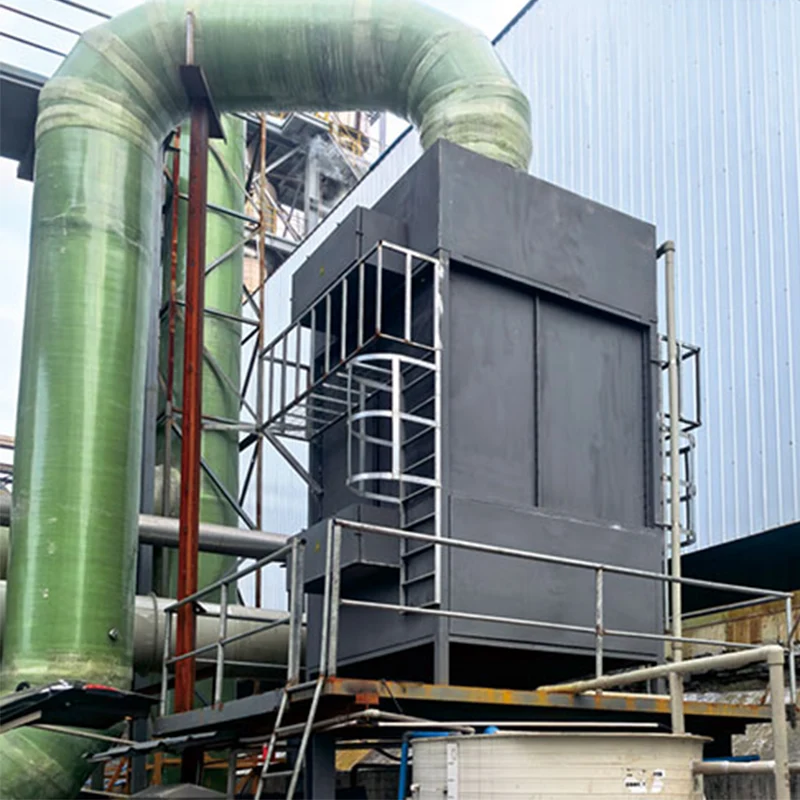
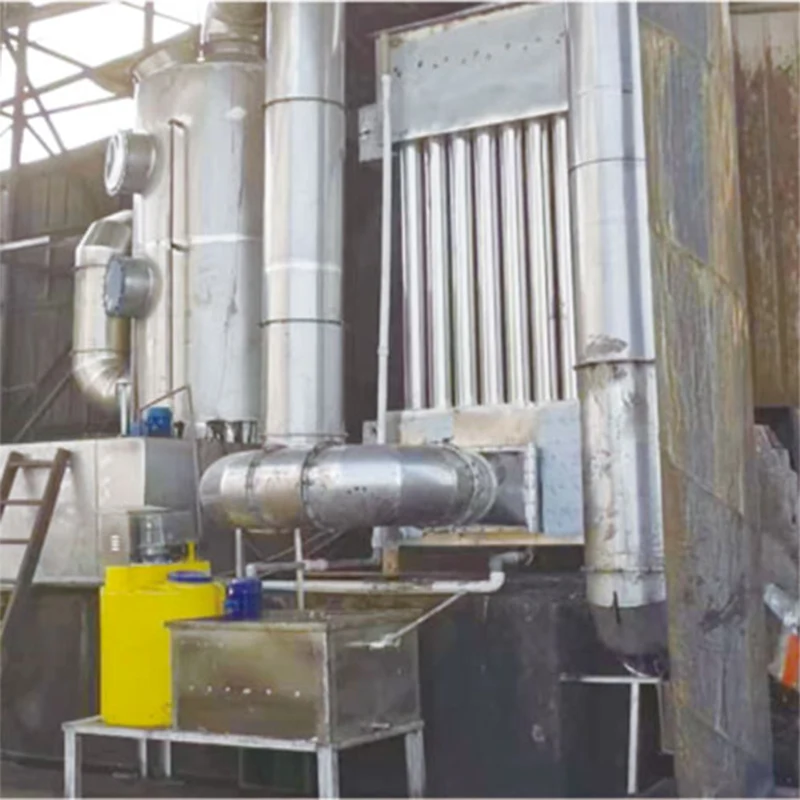
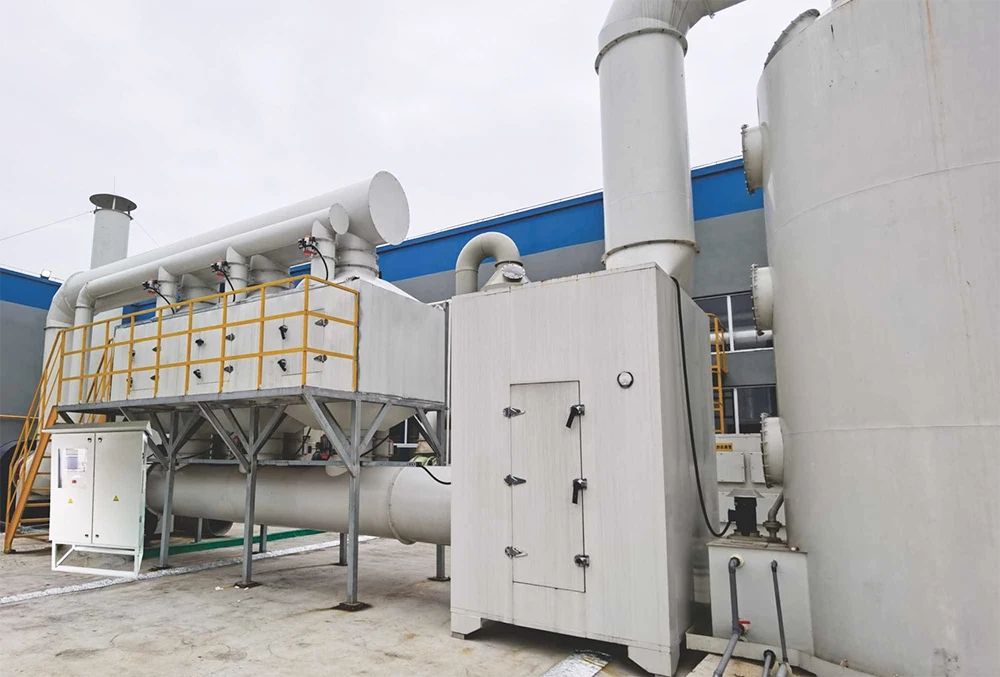
The scrubbing tower is the core of the system. It is typically a vertical cylinder with flanged connections for gas inlet, gas outlet, liquid inlet, drain, and inspection ports. The tower internals include:
- Spray nozzles for initial gas-liquid contact
- Packing layer supported by a grid plate
- Liquid distribution header above the packing
- Demister pad at the top to capture droplets
For multi-stage systems, two or more packed sections are stacked in a single tower with intermediate liquid collection and redistribution.
Circulation System
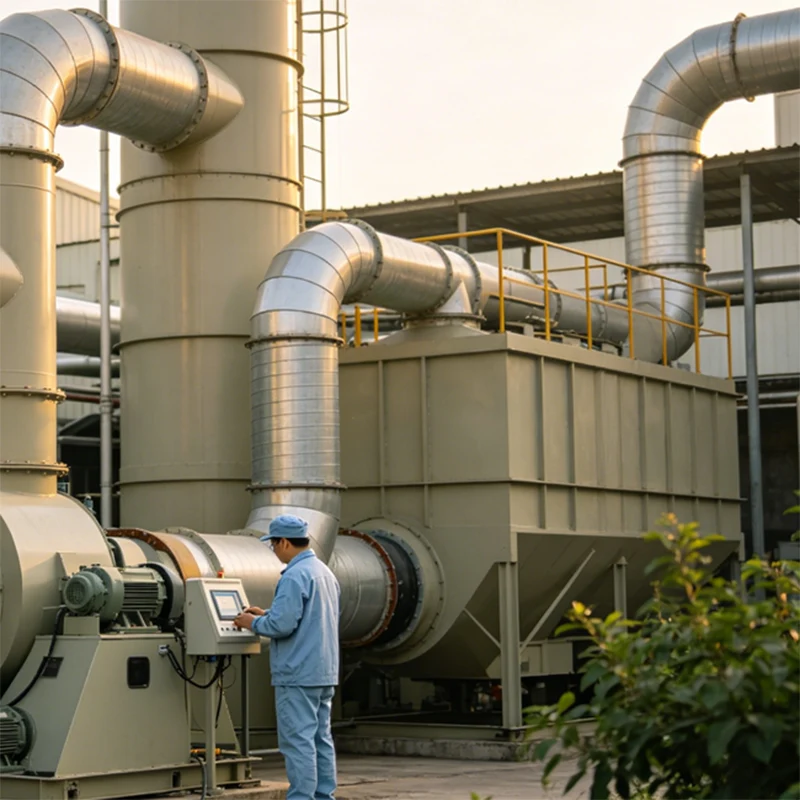
A circulation pump draws scrubbing liquid from the bottom tank and delivers it to the spray headers. A pH controller monitors the liquid and activates a dosing pump to add fresh NaOH solution as needed. A conductivity or density meter can be used to trigger blowdown when dissolved salts reach a set concentration.
Exhaust Fan and Stack
A centrifugal fan draws gas through the system and discharges it to the stack. The fan is selected for the system pressure drop and is coated or lined for corrosion resistance. The stack height is determined by local dispersion requirements and building height.
Material Selection
| Component | Recommended Material | Notes |
| Tower body (HCl, H₂SO₄) | FRP or PP | Good corrosion resistance at moderate temperature |
| Tower body (HF) | PP or PVDF | HF attacks glass fiber; FRP is not suitable |
| Tower body (high temperature) | 304/316 stainless steel with coating | Requires pre-cooling if above 80°C |
| Packing | PP (general), ceramic (high temperature), PVDF (HF) | Ceramic is not suitable for HF |
| Spray nozzles | PP, PVDF, or Hastelloy | Hastelloy for high-temperature or highly corrosive duty |
| Piping | PP, PVC, or PVDF | Match material to acid type and temperature |
| Fan | FRP or PP-lined steel | FRP not suitable for HF service |
Applications
Lithium Battery Cathode Material Production
During cathode material calcination and synthesis, acidic gases such as HCl, SO₂, and HF may be released depending on the raw materials and process. The DeFa system is used to treat these gases before discharge. The scrubbing liquid is typically NaOH solution, and the system is configured with two or three stages to handle mixed acid streams. Material selection considers the presence of fluoride, which requires PP or PVDF construction instead of standard FRP.
Electroplating and Surface Treatment
Electroplating lines generate acid mist from plating baths, especially during chrome plating, nickel plating, and pickling. The system captures the mist at the tank surface and treats it through a packed bed scrubber. The treated gas is discharged through a stack.
Metal Pickling and Steel Processing
Steel pickling with hydrochloric or sulfuric acid produces large volumes of acid mist. The system is often installed with a push-pull ventilation arrangement along the pickling line. High airflow and low pressure drop are important to maintain capture efficiency.
Chemical and Pharmaceutical Manufacturing
Chemical reactors and laboratory fume hoods may release mixed acid vapors. The system can be configured with additional oxidation or reduction stages for specific compounds such as NOₓ or H₂S.
Project Case: Lithium Battery Cathode Material Manufacturer
A cathode material manufacturer in central China operates calcination kilns and mixing lines that release acidic gases containing HCl, SO₂, and trace HF. The original treatment system could not consistently meet emission limits and suffered from corrosion of the fan and ductwork.
The project adopted a DeFa three-stage acidic waste gas treatment system. The first stage uses a venturi for fine mist and dust agglomeration. The second stage is a PP packed bed scrubber with NaOH circulation. The third stage is a demister and polishing spray. The fan and downstream ductwork are PP-lined steel. After commissioning, outlet HCl concentration was below 20 mg/m³ and HF below 5 mg/m³, meeting local emission standards. The system has operated for over two years with scheduled maintenance and no major corrosion issues.
Installation and Commissioning
Site Requirements
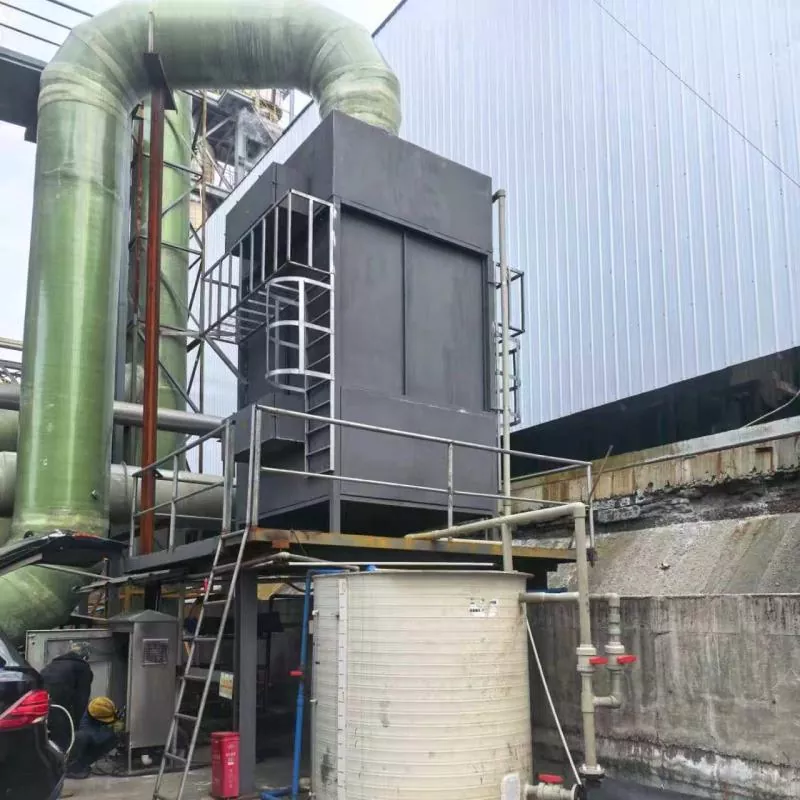
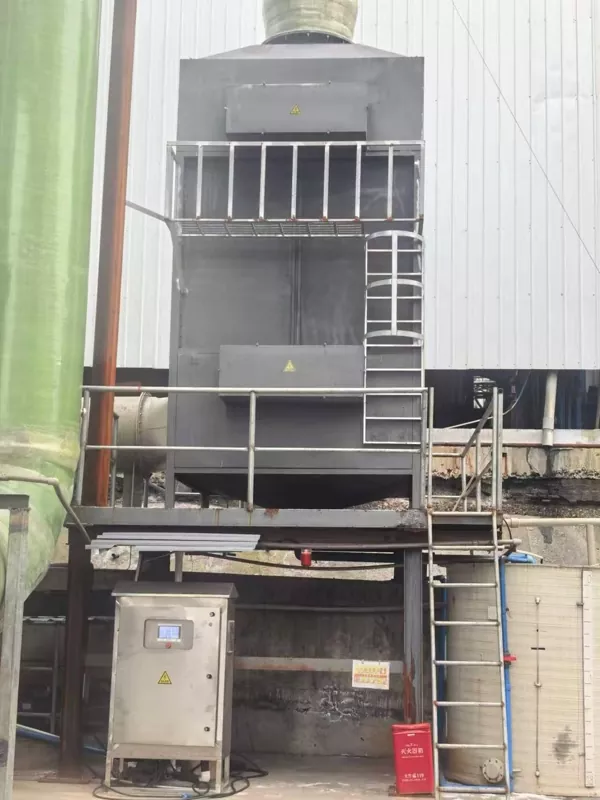
The scrubbing tower is typically installed outdoors on a concrete foundation or on a structural steel platform. The foundation should be level and capable of supporting the weight of the tower, water, and packing. A containment curb is recommended around the tower base to contain accidental spills. Access is required for maintenance of the pump, pH probe, and packing.
Ductwork Connection
Ductwork from the source to the scrubber inlet should be as short and direct as possible. Horizontal runs should have a slight slope toward a drain point to prevent condensate accumulation. Flanged connections with gaskets are recommended for acid service. Flexible connections at the fan inlet and outlet reduce vibration transmission.
Commissioning Steps
- Fill the circulation tank with water and add NaOH to reach the target pH.
- Start the circulation pump and check spray patterns through inspection ports.
- Start the fan and verify airflow direction and system pressure drop.
- Introduce process gas gradually. Monitor pH and adjust dosing as needed.
- After stable operation for 24 hours, sample the outlet gas for acid concentration.
- Set the pH controller and blowdown schedule based on operating data.
Maintenance
| Item | Interval | Action |
| pH probe | Weekly | Calibrate with standard buffer solutions; clean probe tip |
| Circulation pump | Weekly | Check for leaks, abnormal noise, and flow rate |
| Spray nozzles | Monthly | Inspect for clogging; clean or replace as needed |
| Packing layer | Every 6 months | Check for fouling, channeling, or collapse; wash or replace packing |
| Demister pad | Every 6 months | Clean or replace if pressure drop increases |
| Fan impeller and casing | Every 6 months | Inspect for corrosion and balance; clean deposits |
| Ductwork | Annually | Check for corrosion, leaks, and condensate accumulation |
| Blowdown and wastewater | Per design | Discharge neutralized liquid to wastewater treatment; record volume and pH |
Frequently Asked Questions
Can the system treat mixed acid gases containing both HCl and HF?
Yes, but material selection is critical. HF attacks glass fiber, so FRP is not suitable for the wetted parts. PP or PVDF construction is required for the tower body, packing, and piping. The scrubbing liquid must be maintained at a pH high enough to absorb both acids, and the blowdown schedule should account for fluoride accumulation.
How do I determine the number of scrubbing stages required?
The number of stages depends on the inlet concentration, the required outlet concentration, and the solubility of the target gases. For single acids with moderate inlet concentration, two stages are often sufficient. For mixed acids or high inlet concentration, three stages may be needed. Our technical team can calculate the number of stages based on your specific gas composition and emission limit.
What is the typical NaOH consumption?
NaOH consumption depends on the acid load in the gas. As a rough estimate, 1 kg of HCl requires approximately 1.1 kg of NaOH (100% basis). For H₂SO₄, 1 kg requires approximately 0.8 kg of NaOH. The actual consumption is higher due to blowdown losses and pH control tolerance. A dosing pump and pH controller minimize waste.
How is the wastewater from the scrubber handled?
The circulating liquid accumulates dissolved salts from the neutralization reaction. When salt concentration reaches a set point, a portion of the liquid is blown down to a wastewater treatment system. The blowdown is typically neutral to slightly alkaline and contains sodium salts. It should not be discharged directly to a water body without treatment. In some cases, the blowdown can be evaporated or reused, depending on local regulations.
Can the system handle high-temperature exhaust gas?
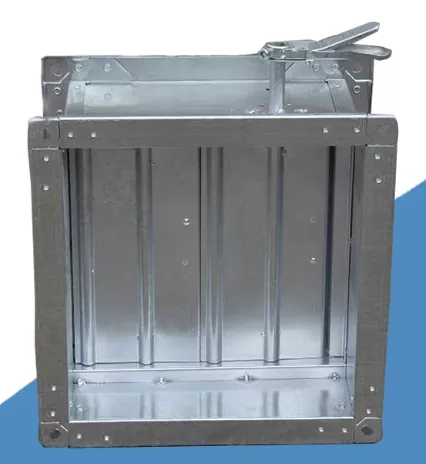
The standard system is designed for inlet temperatures up to 80°C. For higher temperatures, a pre-cooling stage is required. This can be a quench tower with water spray, a heat exchanger, or a dilution air damper. The cooling method depends on the gas composition, temperature, and whether heat recovery is desired.
What is the expected service life of the packing and tower body?
Under normal operating conditions with proper pH control and regular maintenance, the PP or FRP tower body can last 10 to 15 years. The packing typically lasts 5 to 8 years, depending on fouling and the presence of fluoride or other aggressive components. HF service may reduce packing life, and more frequent inspection is recommended.
Are there reference installations in the lithium battery industry?
Yes. A lithium battery cathode material manufacturer in central China has been operating a DeFa three-stage acidic waste gas treatment system for over two years. The system treats exhaust from calcination and mixing processes containing HCl, SO₂, and trace HF. Outlet concentrations are below local emission limits, and the system has required only scheduled maintenance.
About DeFa
DeFa is the environmental purification equipment brand of Shengyuan Technology. The company has more than 20 years of experience in high-voltage power supplies, plasma applications, and industrial exhaust gas treatment. Its products serve customers in lithium battery manufacturing, electroplating, chemical processing, and metal finishing. The acidic waste gas treatment system draws on the company's experience in corrosion-resistant construction and automatic control. Each system is hydro-tested before shipment, and third-party performance test reports can be provided upon request.
Hot Tags: Acidic Waste Gas Treatment System, Manufacturer, Supplier, Factory
Send Inquiry
Contact Info
-
Address
No. 661 Cangchu Road, Jiangbei District, Ningbo City,ZHEJIANG PROVINCE,CHINA
-
Tel
-
Email
For inquiries about our products or pricelist, please leave your email to us and we will be in touch within 24 hours.