Prepared by the DeFa Engineering Team
Quick answer
A credible VOC treatment system cost cannot be calculated from airflow alone. The price depends on minimum and maximum airflow, VOC mass loading, compound chemistry, temperature, humidity, co-pollutants, operating hours, outlet requirements, materials, safety controls, site work and the required treatment train.
Compare quotations using three separate values: total installed capital cost, annual operating and maintenance cost, and lifecycle cost over the same evaluation period. A lower equipment price can become the more expensive choice when it requires frequent carbon replacement, continuous auxiliary fuel, wastewater treatment or production downtime.
Why VOC treatment cannot be priced by m³/h alone
Airflow determines the approximate scale of ducts, fans and vessels. It does not reveal how many kilograms of VOC must be removed, whether the compounds can be adsorbed or oxidized safely, or how much pretreatment the gas needs.
Consider two exhaust streams with the same airflow. One may contain a low, intermittent odor load suitable for a modular carbon stage. The other may run continuously with solvent vapor, oil mist and acid-forming compounds, requiring filtration, oxidation, corrosion-resistant materials and downstream scrubbing. Their equipment scope and annual costs will not be comparable.
Before discussing price, calculate normal and peak VOC mass loading. The VOC mass loading calculation guide explains how to convert airflow and concentration into kg/h and how to compare inlet and outlet mass rates.
Total installed capital cost is larger than the equipment quotation
The U.S. EPA's Air Pollution Control Cost Manual provides a consistent framework for developing control-device costs and separates purchased equipment, installation and annual costs. Its chapters and calculation spreadsheets cover carbon adsorbers, refrigerated condensers, oxidizers and several other controls. The manual is a methodology reference, not a substitute for current local quotations.
| Cost group | Typical scope | Common omission |
|---|---|---|
| Source capture | Hoods, enclosures, dampers, branch ducts and balancing | Modifications needed to maintain production access and capture velocity |
| Gas conditioning | Filters, mist eliminators, cooling, heating, dehumidification or scrubbing | Protection required for dirty, wet, sticky or corrosive gas |
| Main control device | RTO, carbon adsorber, catalyst, condenser, scrubber or combined system | Internal media, burner package, regeneration equipment or standby capacity |
| Air movement | Fans, motors, variable-frequency drives, silencers and stack | Fan margin at loaded-filter and dirty-equipment pressure drop |
| Controls and safety | PLC, instruments, alarms, interlocks, fire and explosion protection | Integration with the production line and emergency shutdown philosophy |
| Utilities | Gas, electricity, steam, nitrogen, cooling water, compressed air and drains | Utility upgrades from the plant connection point |
| Site and installation | Foundation, steelwork, crane access, insulation, piping, wiring and weather protection | Local labor, permits, freight, taxes and restricted installation access |
| Acceptance | Commissioning, training, performance testing and documentation | Sampling ports, test platforms and third-party test cost |
Ask each supplier to mark every line as included, excluded, by others or not applicable. This prevents a low equipment-only quotation from being compared with a turnkey installed proposal.
Annual OPEX must use the plant's operating profile
Annual operating cost should be calculated for minimum load, normal production and credible peak operation. Use local utility and waste-disposal rates, actual shifts and expected maintenance intervals. Supplier assumptions should be visible and editable.
| Cost category | Examples | Required calculation basis |
|---|---|---|
| Energy | Natural gas, electricity, steam, cooling and compressed air | Demand by operating case × hours × local tariff |
| Consumables | Activated carbon, catalyst, filters, chemicals and biological media | Usable capacity or replacement trigger, not a generic calendar interval |
| Waste | Spent carbon, filters, scrubber blowdown, condensate and hazardous residues | Mass or volume × characterization, transport and disposal rate |
| Maintenance | Labor, calibration, cleaning, valves, burners, pumps, media and spare parts | Planned task hours, parts and shutdown frequency |
| Monitoring | Continuous instruments, sampling, stack tests and recordkeeping | Permit-required frequency and quality-assurance scope |
| Production impact | Warm-up, changeout, trip recovery and maintenance downtime | Hours unavailable × site-approved cost of lost or delayed production |
Recovery credits may offset part of the cost when usable solvent or heat is genuinely recovered. Apply a conservative value that reflects purity, demand, storage, additional equipment and the hours when the recovered resource can actually be used.
Different VOC technologies move cost into different categories
Regenerative thermal oxidizer
An RTO usually carries substantial installed scope: insulated chambers, ceramic media, switching valves, burner and fuel train, controls, fan, stack and safety systems. Operating cost depends strongly on airflow, inlet temperature, VOC heat input, heat recovery, air leakage, operating hours and startup frequency.
EPA explains that regenerative thermal oxidizers alternate hot and cool gases through ceramic beds to recover heat. Its thermal oxidizer guidance also identifies chamber temperature, outlet VOC, gas flow and auxiliary-fuel pressure among the relevant performance indicators. These instruments and their maintenance belong in the cost model.
Activated carbon adsorption
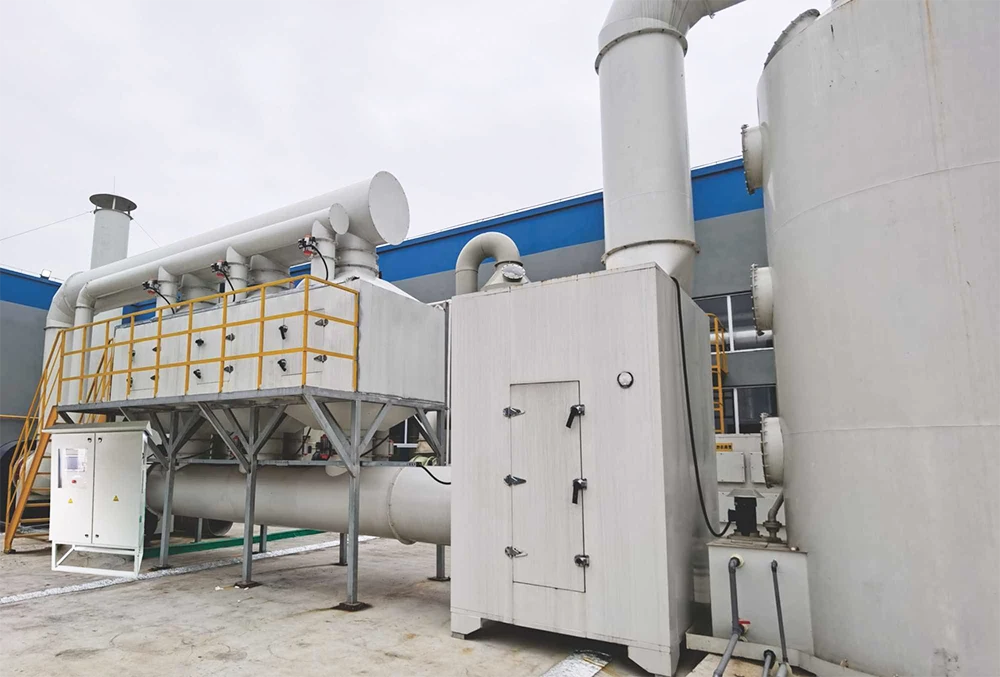
A disposable carbon system can have a simpler equipment package, but its annual cost rises with captured VOC mass and replacement frequency. Media, labor, transport, testing and spent-carbon handling must be included. Humidity, temperature, competing compounds and concentration peaks can shorten the expected cycle.
EPA states that adsorbents have finite capacity and reach breakthrough before saturation. The activated carbon adsorber guidance identifies outlet VOC, bed temperature, gas flow, pressure differential and inlet moisture among the relevant indicators. For service-life planning, use the activated carbon breakthrough guide.
Catalytic oxidation
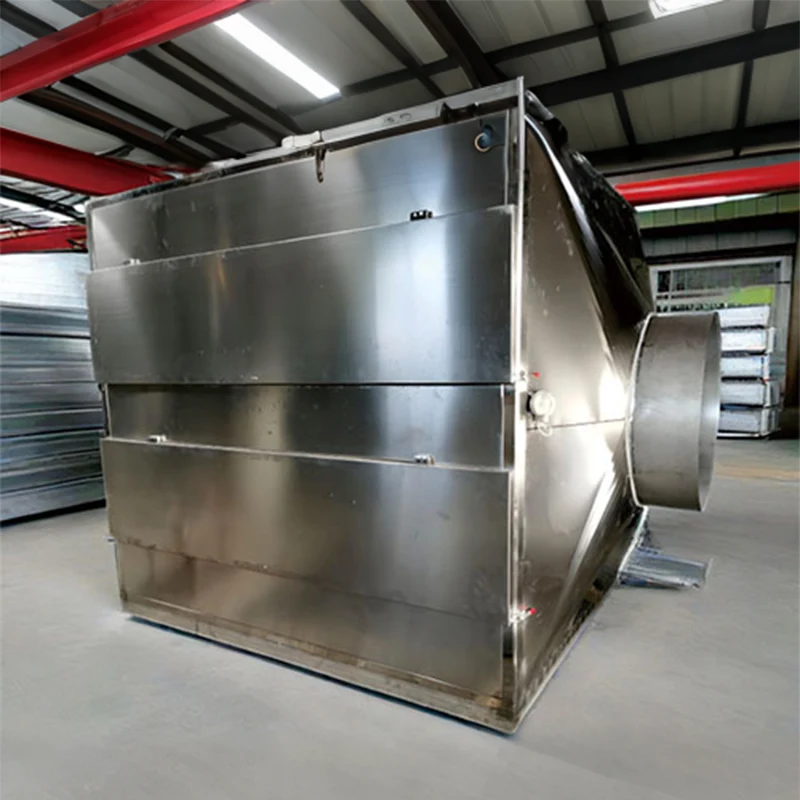
Catalytic systems operate at a lower reaction temperature than conventional thermal oxidation, which can reduce fuel demand for a compatible stream. The model must add catalyst cost, expected replacement or testing, pretreatment and the consequence of poisoning or fouling. A lower burner duty does not automatically mean a lower lifecycle cost.
Zeolite concentrator plus oxidizer
A concentrator adds media, seals, drives, filters and desorption controls, but it can reduce the gas volume sent to the final oxidizer for a compatible high-airflow, dilute stream. Compare the complete system against a full-flow oxidizer, including concentrator pressure drop, cleaning, media condition and the downstream heat balance.
Condensation and solvent recovery
Condensation shifts cost toward refrigeration, heat exchange, separation and liquid handling. A recovery credit is credible only when the solvent quantity, purity and reuse route are known. A polishing stage may still be required to reach the outlet limit.
Wet scrubbing
Scrubber cost includes tower, packing or sprays, pumps, tank, dosing, mist control, corrosion-resistant materials and blowdown management. EPA's wet scrubber guidance identifies liquid flow, pressure differential and liquid condition as important operating indicators. Chemical consumption, wastewater and scaling can become major recurring costs.
Use the industrial VOC treatment guide to confirm which technologies deserve costing. Do not request firm prices for methods that have not passed the chemistry and operating-condition screen.
How to calculate VOC treatment lifecycle cost
A simple screening model can compare total cost over the same number of years:
Lifecycle cost = total installed capital cost + cumulative operating and maintenance cost − verified recovery credits
Finance teams may convert future costs to present value using the organization's approved discount rate. Apply the same period, inflation basis, energy escalation, residual value and financing assumptions to every alternative.
Two additional metrics help purchasing teams:
Annual cost per kg captured = annualized system cost ÷ annual captured VOC mass
Simple payback for an upgrade = additional installed cost ÷ verified annual net savings
Neither metric should be compared across systems with different capture scope, outlet limits, availability, waste obligations or useful life. A low cost per kilogram is not acceptable if the system cannot meet the permit under peak production.
Run a sensitivity analysis
Change the assumptions most likely to move the decision: annual hours, energy price, VOC loading, carbon life, catalyst life, disposal rate, production growth and downtime. Report a base case and credible high-cost case rather than a single precise-looking total.
Normalize supplier quotations before comparing price
| Comparison field | What the quotation should state |
|---|---|
| Design conditions | Minimum, normal and maximum airflow, concentration, mass load, temperature, humidity and compounds |
| Performance basis | Outlet limit or removal target, test method, averaging period and permitted operating envelope |
| Included equipment | Capture, pretreatment, main device, fan, stack, controls, instruments and safety systems |
| Installation boundary | Freight, foundation, erection, utilities, wiring, insulation, commissioning and training |
| Utility demand | Consumption at minimum, normal and peak load, with calculation assumptions |
| Consumable duty | Carbon, catalyst, filters and chemicals with replacement trigger and expected range |
| Waste streams | Type, expected quantity, handling requirement and responsibility |
| Maintenance | Tasks, frequency, labor, spares, access and planned downtime |
| Testing and monitoring | Instruments, sampling provisions, acceptance testing and excluded third-party work |
| Exclusions and validity | Items by others, currency, taxes, delivery basis and quotation validity date |
Quotation red flags
- A fixed price based only on airflow
- A removal percentage without defined inlet conditions or test method
- RTO fuel consumption without a heat balance and operating cases
- Carbon replacement frequency without a compound-specific capacity basis
- No allowance for pretreatment, loaded pressure drop or waste disposal
- Recovery savings without solvent purity, usable heat demand or operating overlap
- Turnkey language followed by an undefined list of work "by customer"
Reduce the load before purchasing a larger system
- Reduce VOC generation. Review materials, solvent handling, lids, seals, cleaning and process temperature.
- Improve source capture. Enclose the emission point and avoid pulling unnecessary room air into the system.
- Separate unlike streams. Do not mix a small concentrated vent with a large clean exhaust unless the combined treatment is justified.
- Protect the main device. Remove mist, dust and condensables before they foul carbon, ceramic media, catalyst or heat exchangers.
- Use measured load profiles. Size for credible peaks without treating every hour as the worst-case condition.
- Evaluate genuine recovery. Use heat or solvent only where the plant has a stable demand and the recovered quality is acceptable.
Oversizing raises capital cost, fan power and sometimes fuel demand. Undersizing creates emission risk and expensive retrofits. The goal is not the smallest machine; it is a system matched to the measured operating envelope with appropriate margin.
Cost-focused VOC system RFQ checklist
- Process description and source-capture arrangement
- Minimum, normal and maximum airflow
- Normal and peak VOC concentration and mass loading
- Compound list, temperature, humidity, oxygen and co-pollutants
- Operating hours, shifts, batch cycle and planned expansion
- Outlet limit, test method, averaging period and availability requirement
- Site layout, climate, utilities and installation constraints
- Required quotation boundary and local work by others
- Local utility, consumable, labor and waste-disposal rates
- Lifecycle evaluation period and financial assumptions
Request a comparable VOC treatment cost model
DeFa Environmental Equipment supplies industrial waste gas treatment equipment, including RTO systems and activated carbon equipment. Send the measured design basis, operating schedule and site boundary so each alternative can be compared on the same installed and annual-cost assumptions.
Frequently asked questions
How much does an industrial VOC treatment system cost?
A reliable figure requires airflow, VOC mass loading and composition, gas conditions, operating hours, outlet requirements, treatment scope and site information. An airflow-only price is not a dependable project budget.
Which has lower operating cost: RTO or activated carbon?
Carbon can be economical for a low or intermittent mass load, while frequent media replacement can make it expensive for continuous duty. An RTO can benefit from VOC heat input and regenerative heat recovery, but a dilute high-airflow stream may require substantial fuel. Compare both with the same measured load profile.
Should I choose the lowest capital quotation?
Not without comparing scope and lifecycle cost. Check installation exclusions, utilities, consumables, waste, maintenance, monitoring, downtime and whether the performance basis covers peak production.
Can solvent or heat recovery be counted as savings?
Yes, when the recovered quantity and quality are usable and plant demand occurs at the same time. Deduct separation, storage, maintenance and backup-energy costs before claiming a net credit.