Ventilation Control Damper
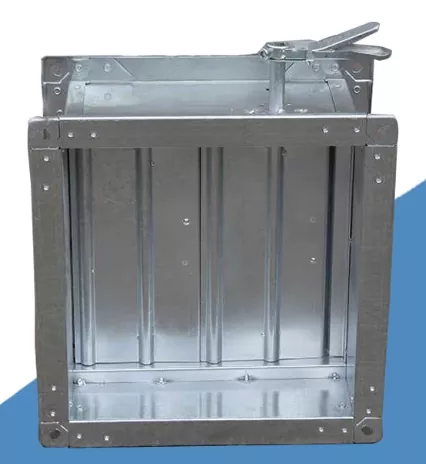
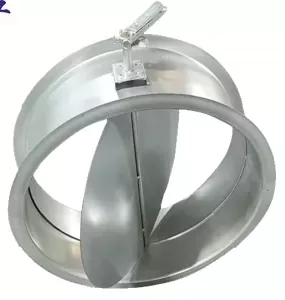
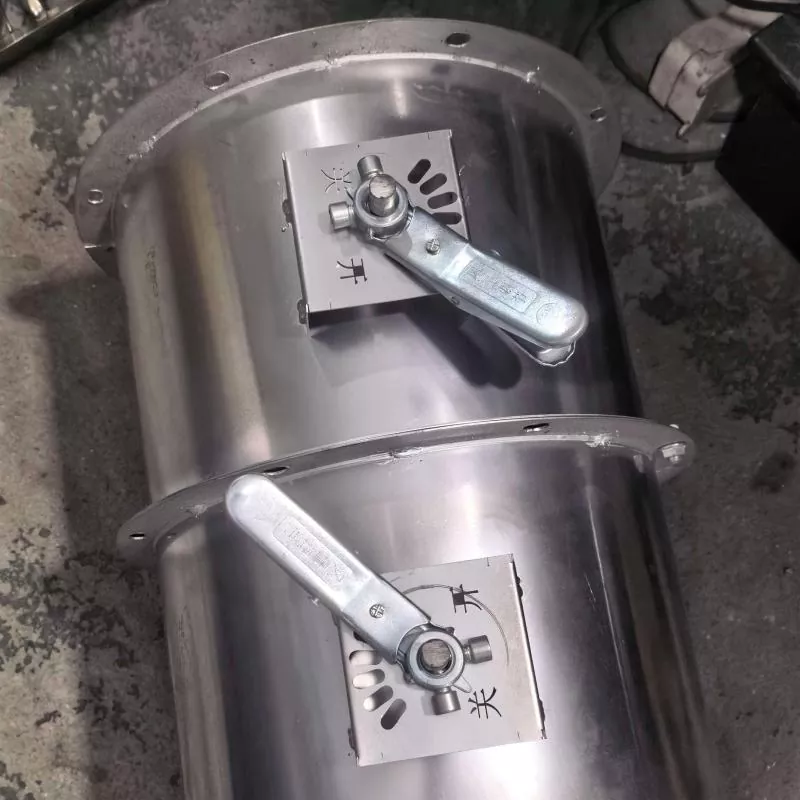
DeFa Ventilation Control Damper regulates, isolates, and shuts off airflow in HVAC, industrial ventilation, cleanrooms, and transport systems. Available as motorized, pneumatic, manual, or fire/smoke damper configurations, it supports custom sizes, materials, actuators, control signals, and leakage classes for project-specific air control.
DeFa ventilation dampers are used to manage airflow in HVAC systems, cleanrooms, industrial process ventilation, and tunnel or metro air handling. The product range covers motorized control dampers, manual balancing dampers, pneumatic shut-off dampers, and fire/smoke dampers. The dampers are produced by Shengyuan Technology (DeFa brand), which has more than 20 years of experience in environmental control equipment and high-voltage electronic systems.
Standard and custom sizes can be supplied. Material selection, actuator type, control signal, and leakage class are configured according to the duct system requirements. The following sections outline the main technical data, construction details, selection points, and maintenance recommendations.
Technical Data
| Parameter | Available Range |
| Duct Size | 100 × 100 mm up to 2000 × 2000 mm; round versions also available |
| Frame and Blade Material | Galvanized steel, stainless steel 304/316, or aluminum alloy |
| Blade Configuration | Opposed blade for modulating duty; parallel blade for open/close duty |
| Maximum Working Pressure | 1500 Pa standard; higher ratings on request |
| Temperature Range | -20°C to +70°C standard; fire dampers up to 280°C |
| Leakage Class | Class 0 to Class 4 per EN 1751 or GB/T 14294 |
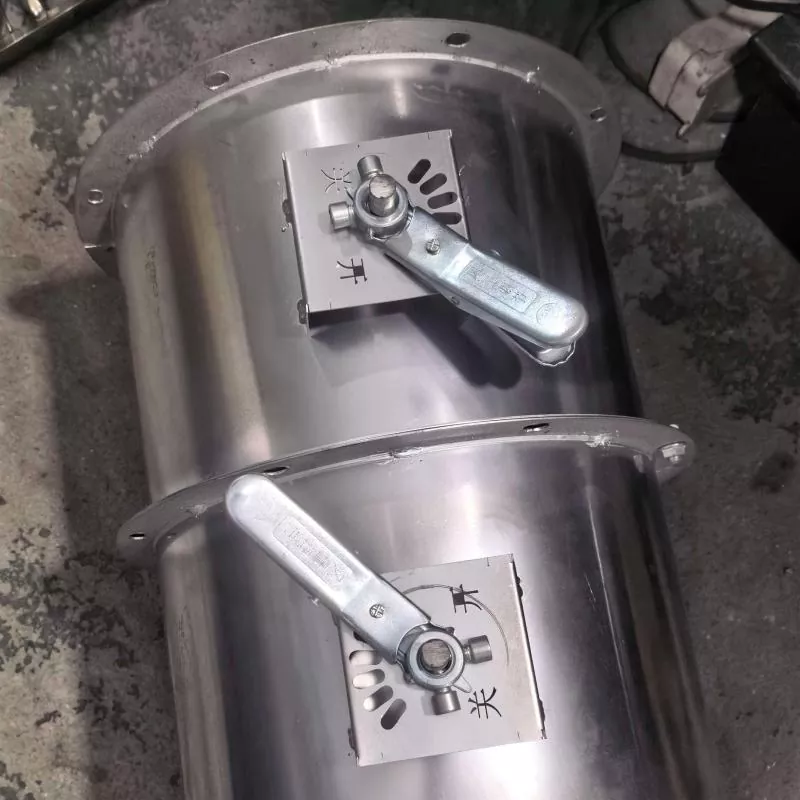
| Actuator Options | Electric (24V AC/DC, 220V AC), pneumatic, or manual quadrant |
| Control Input | 0-10V DC, 4-20mA, or Modbus RTU |
| Actuator Torque | 5 Nm to 50 Nm, matched to damper area |
| Enclosure Protection | IP42 indoor; IP54 or IP65 for outdoor or wet areas |
| Fire Resistance Rating | 1.5 h or 3 h for certified fire dampers |
Construction Details
Frame and Blades
The frame is formed from galvanized steel or stainless steel with a flanged or slip-fit connection. Blades are profiled for stiffness and are available in single or multi-blade arrangements. For corrosive environments, 316 stainless steel or epoxy-coated galvanized steel can be specified.
Seals and Bearings
Blade edge seals and frame gaskets reduce leakage in the closed position. Nylon or bronze bearings support the blade shafts. These bearings are selected to provide low friction without the need for regular lubrication.
Actuator Mounting
Electric and pneumatic actuators are mounted on the damper shaft with a universal clamp or direct coupling. Spring-return actuators are used where the damper must fail to a safe position on power loss. The actuator wiring and position indicator remain accessible after installation.
Selection Guidelines
When selecting a damper, the following points should be considered:
- Control function: For modulating airflow, choose a low-leakage damper with an analog control signal. For simple isolation, a two-position damper with open/close actuator is sufficient.
- Duct pressure: Damper blade and shaft thickness must match the static pressure in the duct. Higher pressure systems require reinforced construction.
- Leakage requirement: Applications such as cleanrooms or laboratories often require Class 0 or 1 leakage. General comfort systems may use Class 2 or 3.
- Environmental conditions: Outdoor installations require weatherproof actuators and corrosion-resistant materials. Kitchen exhaust or chemical fume ducts may need stainless steel construction.
- Fire safety: Where the duct passes through a fire-rated wall, a certified fire damper must be selected and installed according to local code.
Quality Assurance and Testing
DeFa dampers are produced under a documented quality management system. Each batch is checked for blade alignment, seal integrity, and actuator operation. Leakage tests are performed on sampling basis according to EN 1751 or GB/T 14294. Fire dampers are tested in approved laboratories and supplied with the relevant test reports.
For projects that require additional documentation, we can provide material certificates, actuator cycle test records, and factory acceptance test reports.
Installation Notes
- Mount the damper in a straight duct section. A straight run of at least 2 to 3 duct diameters before and after the damper reduces turbulence and improves control accuracy.
- For fire dampers, follow the installation orientation marked on the label and seal the annular gap with approved fire-stopping material.
- Check that the actuator rotation direction matches the control signal. If multiple dampers are used, set addresses and signal ranges before system startup.
- Provide an access panel near the damper to allow inspection and actuator replacement without cutting the duct.
Maintenance and Troubleshooting
Routine Checks
- Every month: visually inspect blades and seals for dust buildup or foreign objects.
- Every quarter: cycle the damper through its full range and verify that the position feedback matches the actual blade angle.
- Every year: test fail-safe operation for fire/smoke dampers and replace any worn seals or actuator batteries.
Common Faults
- Damper does not respond to control signal: Check wiring, actuator power supply, and signal polarity. If the actuator receives a signal but does not move, the torque may be insufficient due to duct pressure or blade binding.
- Air leakage in closed position: Inspect blade edge seals for wear or misalignment. Adjust blade stops if necessary.
- Excessive operating noise: Check for loose blades, worn bearings, or duct vibration. Tighten shaft couplings and add duct stiffeners if needed.
Frequently Asked Questions
Can I get a damper in a non-standard size?
Yes. Custom sizes are produced to match non-standard duct dimensions. Provide the opening size, flange type, and required leakage class for an accurate quotation.
What is the difference between opposed blade and parallel blade dampers?
Opposed blade dampers rotate adjacent blades in opposite directions, providing a more linear airflow characteristic. They are preferred for modulating control. Parallel blade dampers move all blades in the same direction and are used mainly for open/close or two-position service.
Do you supply dampers with fast acting actuators for safety systems?
Yes. Spring-return electric actuators and pneumatic actuators with quick exhaust valves can achieve closure times of a few seconds. These are often specified for smoke control or emergency isolation.
Can the damper be used in a high humidity environment?
Stainless steel or coated galvanized steel construction with IP54 or higher actuator protection is suitable for high humidity areas such as swimming pools or coastal installations. Sealed bearings and gaskets should also be selected.
What documents are provided with fire dampers?
Certified fire dampers include the test report, conformity certificate, and installation instructions. The specific documents depend on the certification standard requested, such as GB, EN, or UL.
About DeFa
DeFa is the product brand of Shengyuan Technology, a manufacturer specializing in environmental control hardware and high-voltage electronic systems. The company's damping products benefit from the same engineering discipline applied to its power supply and purification equipment, with attention to material selection, tolerances, and long-term reliability.
Hot Tags: Ventilation Control Damper, Air Control Damper, HVAC Control Damper
Send Inquiry
Contact Info
-
Address
No. 661 Cangchu Road, Jiangbei District, Ningbo City,ZHEJIANG PROVINCE,CHINA
-
Tel
-
E-mail
For inquiries about our products or pricelist, please leave your email to us and we will be in touch within 24 hours.