What Are the Differences Between Wet and Dry Industrial Dust Removal Equipment?
Wet and dry Industrial Dust Removal Equipment differ primarily in how they separate airborne particles from industrial exhaust and how they handle the dust after collection. Dry systems use centrifugal force, filter media or electrostatic attraction to remove particles while keeping the collected material in a solid state. Wet systems bring dust-laden air into contact with water or another suitable liquid, transferring particles into a liquid, slurry or sludge stream. The distinction affects filtration performance, energy consumption, maintenance, waste treatment and the types of industrial processes each technology can serve.
Neither technology is automatically the better choice for every factory. A dry baghouse may be suitable for fine, dry and recoverable powder, while a wet Venturi collector may be considered for selected fine particulate, sticky dust or process gas that requires liquid contact. Buyers should evaluate particle size, dust chemistry, temperature, humidity, airflow, explosion risks and local emission requirements before selecting a system. Understanding these factors helps manufacturers compare equipment on engineering performance and lifecycle cost rather than relying on a single efficiency figure or purchase price.
Table of Contents
1. What Are the Working Principles of Wet and Dry Dust Collectors?
2. How Do Wet and Dry Dust Collection Systems Differ in Performance?
3. Which Industrial Applications Are Suitable for Wet or Dry Dust Collection?
4. How Should Buyers Select and Verify Industrial Dust Collection Equipment?
1. What Are the Working Principles of Wet and Dry Dust Collectors?
The fundamental difference between wet and dry dust collectors is the medium used to separate particles from the airflow. Dry equipment relies on mechanical separation, filtration or electrostatic force. Wet equipment uses liquid contact to capture particles and transfer them out of the gas stream. Both approaches can be integrated into industrial ventilation and exhaust treatment systems, but their internal structures and downstream requirements are different.
How Does Dry Dust Collection Work?
A dry dust collection system draws contaminated air from a production area through extraction hoods, ducts or enclosed process connections. The air enters a collector, where particles are separated from the gas. Depending on the equipment design, the dust may be removed by centrifugal force, intercepted by filter media or attracted to electrically charged collection surfaces. Cleaned air then passes to the outlet, while captured solids are discharged into a hopper or collection container.
Dry collection covers several technologies rather than one standard machine. Each type has a different separation mechanism and is suited to particular particle characteristics.
- Cyclone dust collector: Dust-laden air enters a cylindrical or conical chamber and follows a rotating flow path. Centrifugal force drives larger and denser particles towards the chamber wall. The particles lose momentum and fall into the lower hopper, while the cleaned gas exits through the upper outlet. Cyclones are frequently used as primary separators to reduce the dust load entering downstream filtration equipment.
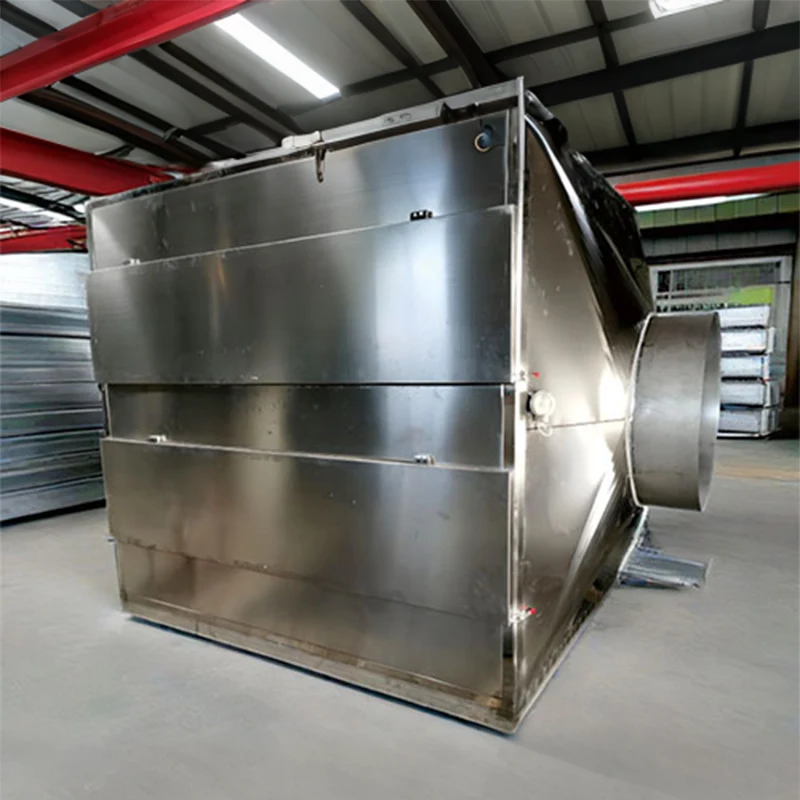
- Baghouse dust collector: Contaminated air passes through fabric filter bags. Dust accumulates on the filter surface while air passes through the media. A pulse-jet, reverse-air or mechanical cleaning arrangement removes the accumulated dust, allowing it to fall into the hopper. Filter media must be selected according to temperature, humidity, chemical exposure and particle characteristics.
- Cartridge dust collector: Pleated cartridges provide a relatively large filtration area within a compact housing. These systems are often considered for localized grinding, welding, laser cutting and other applications where suitable cartridge media can handle the dust loading and process conditions.
- Electrostatic precipitator: An electric field charges suspended particles and drives them towards collecting plates or electrodes. The collected dust is periodically removed from the surfaces. This method can be applied to large gas volumes and certain high-temperature processes, although performance depends on dust resistivity and electrical operating conditions.
One important feature of dry collection is that the captured material generally remains in solid form. This can be useful when a factory wants to recover valuable powder, return suitable material to production or store the collected dust in sealed containers. It also avoids creating a wastewater stream as part of the collection process. However, the absence of water does not automatically make a dry system easier to operate. Filter clogging, dust leakage, hopper bridging and combustible-dust hazards must still be addressed.
For example, a baghouse handling dry mineral powder may perform reliably when the filter material, filtration area, airflow and cleaning cycle are correctly matched. If the same process introduces oil mist or condensation, the dust may adhere to the filter and become difficult to remove. Pressure drop can rise, airflow can fall and the system may no longer maintain the required capture performance. A cyclone installed upstream can reduce the amount of coarse dust reaching the filter, but it should not be assumed to replace fine-particle filtration.
How Does Wet Dust Collection Work?
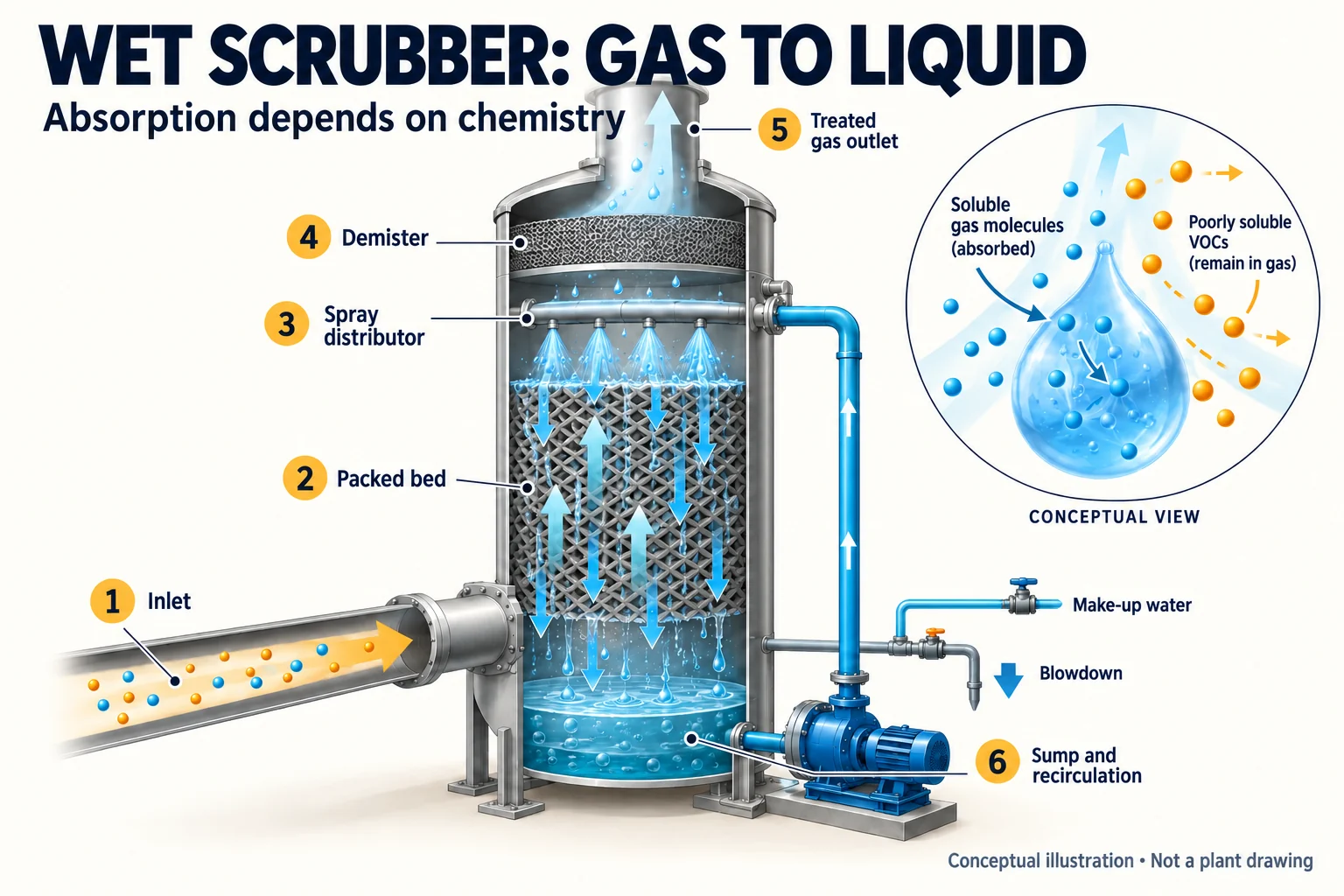
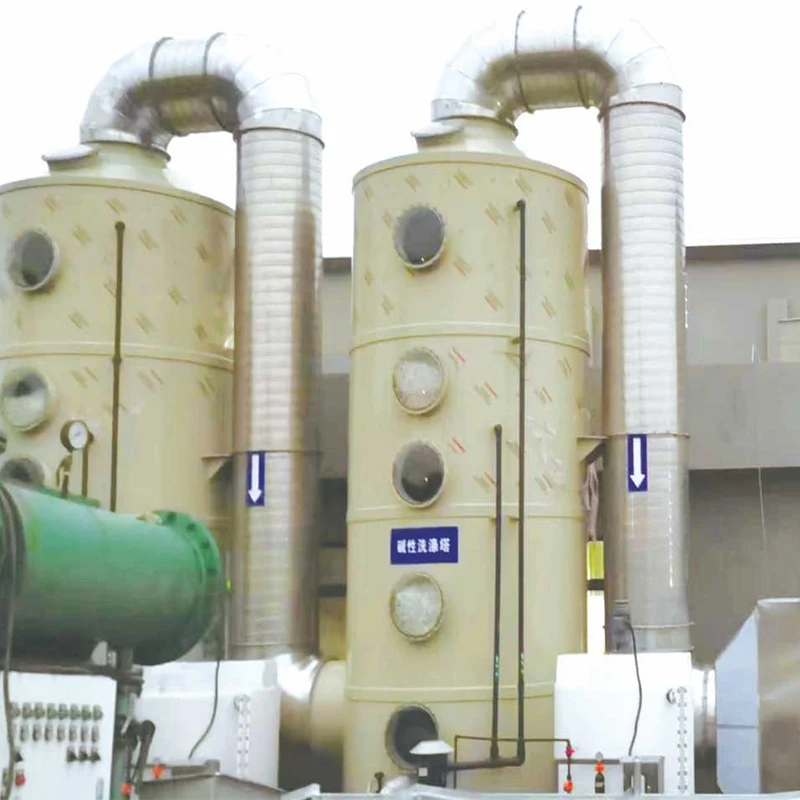
Wet dust collection uses water or another compatible liquid to bring airborne particles out of the gas stream. The contaminated air enters a chamber where it contacts liquid droplets, a liquid film or a turbulent gas-liquid mixture. Particles collide with the liquid, become wetted and are carried away from the airflow. The resulting mixture is separated so that the treated gas can leave the collector and the captured solids can be managed as liquid waste or sludge.
The level of gas-liquid contact varies with the equipment design. A spray tower, water bath collector and Venturi scrubber should not be treated as interchangeable systems.
- Spray tower: Nozzles distribute liquid droplets through the gas stream. Particles collide with the droplets and are carried downwards with the liquid. The design is relatively straightforward, but fine-particle performance depends on droplet size, liquid distribution, gas velocity and contact time.
- Water bath collector: The airflow passes through or close to a liquid-contact zone. Dust is wetted and transferred into the collection water. The arrangement may be considered for suitable grinding, polishing or process extraction applications.
- Water curtain collector: A moving curtain of water creates a contact surface for particles in the airflow. Captured material enters the liquid collection system. The effectiveness depends on the airflow arrangement and the characteristics of the dust being treated.
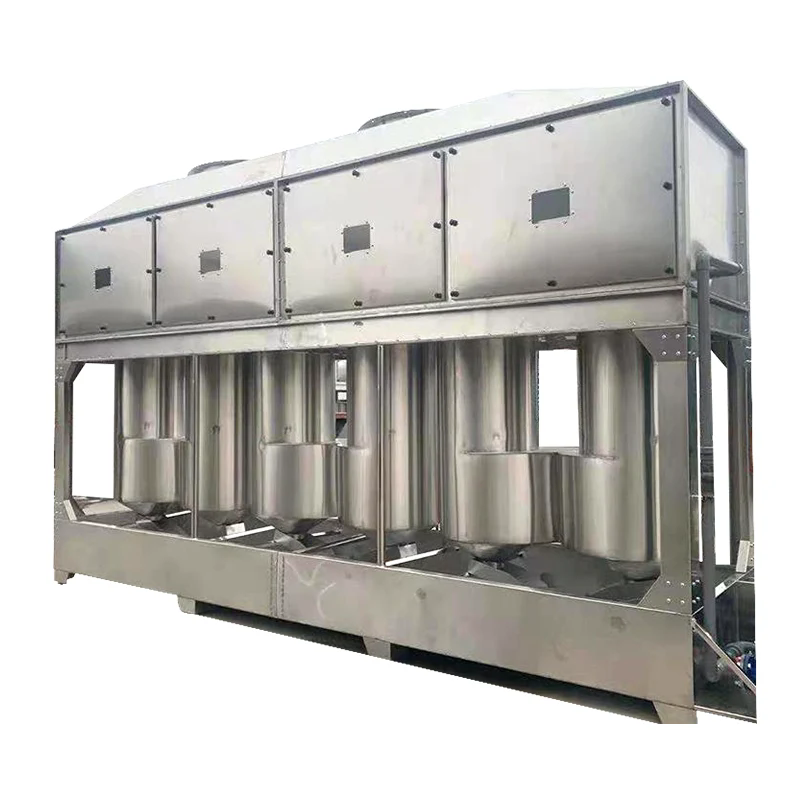
- Venturi wet collector: Gas accelerates through a restricted throat while liquid is introduced into the high-velocity stream. Turbulence disperses the liquid into droplets and increases particle-droplet collisions. This intensive contact can support fine-particle capture, but it normally creates a greater pressure drop than a simple spray arrangement.
- Wet electrostatic precipitator: An electric field charges and collects particles, while liquid washing helps remove material from the collecting surfaces. It is used in selected applications where fine particulate or mist control is required.
Wet collection changes the form of the waste. Instead of discharging dry powder, the system produces contaminated liquid, slurry or sludge. The factory therefore needs an appropriate arrangement for liquid circulation, solids separation, tank cleaning, wastewater treatment and final disposal. Water quality and chemistry can influence corrosion, scaling, nozzle blockage and overall equipment reliability.
DeFa Environmental Equipment (Ningbo) Co., Ltd. lists wet electrostatic precipitators, water curtain dust collectors, Tamei-style RCN wet dust collectors, Venturi wet dust collectors and cyclone hybrid spray towers in its product range. These categories provide different methods of liquid contact and particle separation. The correct configuration still depends on the actual gas volume, dust loading, particle characteristics, liquid compatibility and required outlet condition.
What Happens to the Dust After It Is Captured?
The collection stage is only one part of the process. The way captured material is discharged can influence factory layout, housekeeping, labour requirements and environmental compliance.
| Process Stage | Dry Dust Collector | Wet Dust Collector |
| Particle contact | Filter media, collecting plates or centrifugal separation surfaces | Water droplets, liquid films or a gas-liquid contact zone |
| Particle separation | Particles remain on a filter or collecting surface before discharge | Particles become wetted and transfer into the liquid phase |
| Waste condition | Dry powder or solid particulate | Contaminated water, slurry or sludge |
| Waste handling | Hopper, rotary valve, sealed bin or collection container | Tank, settling unit, filtration equipment or sludge handling system |
| Main maintenance focus | Filter condition, cleaning cycle, hopper discharge and dust leakage | Pumps, nozzles, liquid circulation, corrosion and solids removal |
Neither method eliminates the need for proper waste management. Dry dust may need sealed handling to prevent secondary emissions, while wet sludge may require dewatering, classification and licensed disposal. The waste characteristics should be reviewed before equipment selection, especially when the process involves hazardous metals, chemical residues or valuable recovered material.
2. How Do Wet and Dry Dust Collection Systems Differ in Performance?
Comparing wet and dry collection requires more than looking at a headline removal-efficiency percentage. A system must maintain the required airflow, capture the relevant particle sizes, operate within the process temperature range and manage the collected material safely. Pressure drop, energy consumption, filter or liquid maintenance, corrosion and waste treatment all influence the actual performance delivered over time.
Which System Is More Effective for Fine Particulate Matter?
Fine-particle capture depends on the separation mechanism and the conditions inside the collector. A properly selected fabric filter can capture fine dust through several mechanisms, including interception, inertial impaction and diffusion. As a dust cake develops on the filter surface, it can also contribute to particle capture. The media material, surface treatment, filtration velocity and cleaning cycle all affect the result.
Wet collection relies on particles colliding with liquid droplets or contacting wetted surfaces. The probability of capture is influenced by droplet size, gas velocity, turbulence, liquid-to-gas ratio and contact intensity. A basic spray tower does not provide the same contact conditions as a Venturi scrubber. Higher-energy wet systems can increase particle-droplet interaction, although they also create higher pressure losses and additional operating demands.
The following values are published on DeFa's equipment information pages. They should be treated as product-page reference specifications rather than universal guarantees for every system configuration.
| Equipment Type | Published Information | Practical Interpretation |
| Baghouse dust collector | Dust removal efficiency of at least 99.5%; capable of capturing fine particles down to 0.1 μm as stated on the product page | Suitable for fine-particle filtration when filter media and operating conditions are correctly selected |
| Cyclone dust collector | Primarily suitable for coarse particles above 10 μm | Useful for primary separation and reducing downstream filter loading |
| Electrostatic precipitator | High-temperature applications stated at 400°C or above | Potentially suitable for large-volume industrial flue gas, subject to dust properties and design conditions |
| Wet dust collector | Product range includes spray, water-contact and Venturi configurations | Performance must be confirmed for the selected design and actual process conditions |
These figures should be interpreted in the context of the equipment type and test conditions. Buyers should request the design airflow, inlet dust concentration, outlet emission target, particle-size range and test method behind any quoted efficiency. A percentage without a defined measurement basis is insufficient for comparing two different technologies.
How Do Pressure Drop and Energy Consumption Compare?
Pressure drop is the resistance that air encounters while passing through a collection system. The fan must overcome this resistance while maintaining the airflow required at the extraction points. The total pressure loss includes more than the collector itself. Hoods, ductwork, bends, dampers, filters, scrubbers, mist eliminators and outlet ducts all contribute to the system requirement.
Dry equipment has different pressure-drop characteristics according to its separation mechanism. A cyclone creates resistance through its rotating flow path. A baghouse develops resistance as dust accumulates on the filter media. Pulse cleaning helps control the buildup, but the filter still needs to operate within an acceptable differential-pressure range. Poor cleaning, unsuitable media or condensation can increase resistance and reduce extraction airflow.
Wet equipment also varies by design. A spray tower generally has different resistance characteristics from a Venturi scrubber. A Venturi unit accelerates the gas through a restricted section to create intensive gas-liquid contact. This can improve particle capture in suitable applications, but it may require more fan power. Pumps used for liquid circulation add another electrical load.
For an accurate comparison, procurement teams should request a complete utility schedule. It should include the main fan, circulation pumps, compressed-air equipment, water treatment and other auxiliary systems. Annual electricity use should be estimated using expected operating hours and actual motor loads rather than nominal motor ratings alone.
How Do Maintenance Requirements Differ?
Dry collectors concentrate much of their maintenance work around the filtration and solids discharge systems. Filter bags and cartridges are consumable components, and their service life depends on temperature, moisture, chemical exposure, dust abrasiveness and cleaning frequency. A collector may require regular checks of differential pressure, pulse valves, compressed-air quality, seals, hopper discharge and dust leakage.
Wet collectors shift maintenance attention towards the liquid circuit. Pumps, nozzles, strainers, tanks, pipelines and mist eliminators need inspection. Suspended solids can accumulate in the liquid and block passages if the system does not have an appropriate solids separation and cleaning arrangement. Corrosion and scaling may also occur when liquid chemistry is incompatible with the equipment materials.
The maintenance comparison should therefore include the complete process rather than just the collector housing.
- Dry system checks: Inspect filter media, differential pressure, cleaning valves, compressed-air supply, hopper discharge, seals and dust collection containers.
- Wet system checks: Inspect liquid flow, pump condition, nozzle blockage, tank solids concentration, sludge removal, corrosion and mist carryover.
- Performance monitoring: Record airflow, pressure drop, outlet emissions, operating hours and maintenance events.
- Waste management: Confirm the handling route for dry powder or wet sludge before commissioning.
Which System Has the Lower Operating Cost?
There is no reliable universal answer. A dry system may avoid water consumption and wastewater treatment, but filter replacement, compressed-air use and dust handling contribute to its operating cost. A wet system may avoid conventional filter bags, but it can require pumps, make-up water, blowdown, liquid treatment, sludge removal and corrosion-related maintenance.
Consider a factory that handles a dry mineral powder. A baghouse may allow the factory to collect the powder in a relatively clean solid form. If the material has reuse value, this can be an important operational advantage. However, the plant must account for filter replacement and the energy needed to maintain the required airflow. A wet scrubber may capture suitable particles, but it changes the recovered material into a slurry that may need dewatering and disposal.
Now consider a process with sticky particulate that rapidly blinds conventional filter media. A wet system may be worth evaluating because liquid contact can reduce the tendency of certain materials to adhere to dry filters. The additional costs of water circulation and sludge management must still be included. The lowest-cost option is the one that meets the required emission and safety targets with the most suitable long-term operating arrangement.
What Safety Factors Can Change the Technology Choice?
Combustible dust requires a formal hazard assessment. Fine organic powders and certain metal dusts can create fire or explosion risks when dispersed in air and exposed to an ignition source. A dry collector may require appropriate explosion protection, isolation, bonding, grounding, venting or suppression measures according to the dust hazard analysis and applicable standards.
Wet collection is not automatically safe for every combustible material. Some reactive metals can react with water and generate heat or flammable gases. The chemical composition and reactivity of the dust must be established before a liquid-based system is selected. Corrosive dust and gas streams also require a review of wetted materials, coatings and liquid chemistry.
DeFa provides both dry and wet equipment categories for different industrial dust collection requirements. Our evaluation of a project should begin with the process data, dust characteristics and applicable safety conditions, not simply the preferred equipment type.
3. Which Industrial Applications Are Suitable for Wet or Dry Dust Collection?
Industrial dust varies widely in particle size, density, shape, abrasiveness, moisture affinity and chemical composition. A woodworking plant, a cement facility and a metal fabrication workshop may all need dust control, but their emissions are not interchangeable. The production method, extraction point, operating temperature and waste handling arrangements determine which collection technology should be considered.
Where Is Dry Dust Collection Commonly Used?
Dry collection is often a practical choice when a process generates dry particulate that can be separated and handled in solid form. It can be particularly useful when recovered material has value or when the factory wants to avoid adding moisture to the production waste stream.
- Woodworking and furniture manufacturing: Sawing, sanding, routing and material transfer generate wood chips and fine wood dust. A cyclone can separate larger particles, while a suitable baghouse or cartridge collector can capture finer airborne material. Because wood dust can be combustible, the system requires an appropriate dust hazard assessment and protective design.
- Cement and building materials: Crushing, conveying, mixing and packaging release mineral dust. Baghouse filtration is commonly considered where temperature, humidity and chemical conditions are compatible with the selected media.
- Metal fabrication: Grinding, cutting and machining may produce metal particles and fumes. Source extraction connected to suitable filtration can reduce worker exposure and prevent dust from spreading through the workshop. Metal-specific fire and explosion hazards must be reviewed.
- Grain and food processing: Conveying, screening, milling and packaging can release dry organic particles. Dry collection may allow suitable recovered product to remain separate from water, subject to hygiene and contamination controls.
- Powder handling: Mixing, filling, weighing and transferring powders can generate fugitive emissions. A properly designed hood and duct network connected to a filter collector can capture dust close to the source.
- Mineral processing: Crushing, screening and material transfer often generate coarse and fine particles. Cyclones may be used as pre-separators, with downstream filtration added where the emission target requires it.
Dry collection can support material recovery, but the recovered dust must be assessed before reuse. Material collected from a process may contain oil, metal residues, chemical contaminants or other substances that make it unsuitable for returning to production. The factory should establish a clear route for reuse, recycling or disposal before deciding that dry recovery will reduce waste costs.
When Should Wet Dust Collection Be Considered?
Wet collection may be appropriate when the process generates sticky particles, when liquid contact offers a useful capture mechanism or when cooling is required as part of the treatment process. It can also be evaluated for selected applications where fine particulate or mist control is important. The liquid must be chemically compatible with the dust and gas stream, and the factory must have a practical way to manage the resulting wastewater or sludge.
Examples of applications that may justify a wet system include:
- Selected grinding and polishing operations: Some processes generate fine particulate that can be captured through water contact. A water curtain or another suitable wet collector may be considered after reviewing the material and process arrangement.
- Hot process exhaust: A wet collector may provide gas cooling as part of the treatment process. The design must account for evaporation, temperature changes, corrosion, liquid carryover and downstream equipment requirements.
- Sticky particulate: Certain dusts adhere strongly to dry filter media and can cause rapid blinding. A compatible wet collection process may reduce this problem by transferring the particles into liquid.
- Selected chemical processes: Wet scrubbing may be appropriate where particulate capture and gas-liquid treatment are both relevant. The liquid chemistry and corrosion resistance must be established before equipment selection.
- Fine particulate and mist control: A Venturi scrubber or wet electrostatic precipitator may be evaluated when the required separation process depends on intensive gas-liquid contact or electrostatic collection with wet cleaning.
However, a wet system should never be chosen simply because a dust is combustible. Some metal powders react with water and may produce dangerous heat or flammable gases. The specific material must be tested or assessed by qualified specialists. The presence of a water supply does not remove the need for a proper dust hazard analysis.
Which DeFa Product Categories Match These Process Requirements?
The DeFa product catalogue includes mechanical separation, fabric filtration, extraction equipment and wet collection categories. The following comparison describes their general functions and the types of application questions buyers should consider. It does not replace a project-specific technical proposal.
| Product Category | Separation Principle | Typical Application Considerations |
| Flat-bag dust collector | Fabric filtration | Dry particulate collection where suitable media and airflow can be established |
| Baghouse dust collector | Fabric filtration with dust cleaning | Fine dust from cement, building materials, metallurgy, woodworking and other industrial processes |
| Extraction arm dust collection equipment | Local source capture connected to a collector | Localized welding, grinding and process fume extraction |
| Self-circulating dust collector | Equipment-specific circulation and separation arrangement | Requires confirmation of the actual process design and dust characteristics |
| Wet electrostatic precipitator | Electrostatic collection with wet cleaning | Selected fine particulate and mist treatment applications |
| Water curtain dust collector | Liquid contact | Processes where water-based particle capture is technically suitable |
| Tamei-style RCN wet dust collector | Wet dust collection | Requires confirmation of airflow, dust type and liquid management conditions |
| Venturi wet dust collector | High-velocity gas-liquid contact | Applications requiring intensive contact for particulate capture |
| Cyclone dust collector | Centrifugal separation | Coarse dust pre-separation and reduction of downstream filter loading |
| Cyclone hybrid spray tower | Combined mechanical and liquid-contact treatment | Applications where the combined process is appropriate for the incoming gas and particulate |
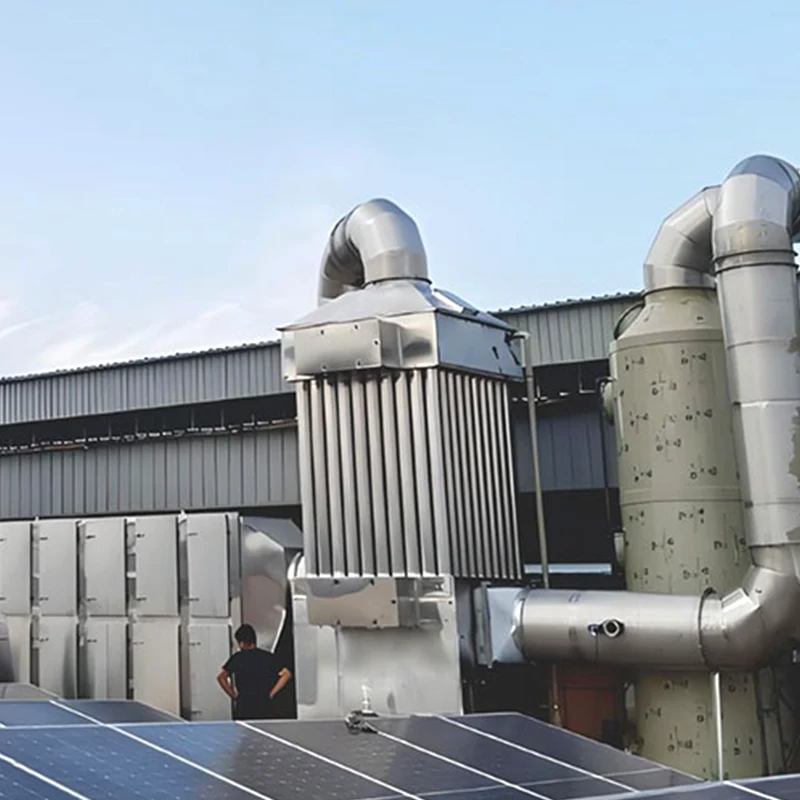
A single collector is not always the best solution. Some production lines benefit from a multi-stage arrangement. A cyclone can remove larger particles before a baghouse handles the finer fraction. A wet scrubber may be followed by a mist eliminator to reduce liquid droplet carryover. The stages must be designed together because the outlet conditions from one unit become the inlet conditions for the next.
Can a Factory Combine Wet and Dry Collection?
Yes. A combined arrangement can be considered when the dust stream contains different particle fractions or when separate treatment stages are needed to meet the required outlet condition. For example, a dry pre-separator may remove coarse material before a downstream wet treatment stage handles the remaining particulate. In another arrangement, a wet scrubber may be installed after a process-specific cooling or conditioning stage.
Combined systems are not automatically more efficient or economical. Each additional stage introduces pressure drop, equipment cost, maintenance points and control requirements. The engineering team should establish why each stage is needed and what measurable improvement it is expected to provide.
Before changing an existing system, the plant should review the fan capacity, duct dimensions, available installation area, electrical supply, drainage and waste treatment facilities. A wet retrofit may require new water circulation and sludge handling infrastructure. A dry retrofit may require filter housings, compressed-air capacity or additional dust safety measures.
DeFa Environmental Equipment (Ningbo) Co., Ltd. lists several dry and wet product categories for industrial applications. Our product evaluation should consider the complete process arrangement, including extraction points, ductwork, fan selection and waste discharge. This approach helps buyers avoid selecting a collector that appears suitable on paper but cannot operate effectively within the existing plant layout.
4. How Should Buyers Select and Verify Industrial Dust Collection Equipment?
A reliable selection process starts with operating data rather than a preferred equipment name. Before comparing quotations, buyers should define the dust source, airflow requirement, inlet concentration, particle characteristics, gas temperature and required outlet condition. These details form the design basis for the collector and its supporting equipment. Without them, a quotation may provide a model number and motor rating without demonstrating whether the proposed unit can meet the factory's actual requirements.
What Process Data Should Be Collected Before Requesting a Quotation?
Prepare a process information sheet that describes both normal and abnormal operating conditions. Production lines rarely operate at one fixed load throughout the day. Start-up, shutdown, batch changes and peak production can affect airflow and dust concentration. The equipment should be evaluated against the operating range that it is expected to handle.
| Parameter | Information to Provide | Why It Matters |
| Air volume | Normal, maximum and minimum airflow in m³/h | Determines collector size, duct dimensions and fan selection |
| Inlet dust concentration | Dust loading in mg/m³ or g/m³ | Influences separation capacity and waste discharge design |
| Particle characteristics | Particle-size distribution, density, shape and abrasiveness | Helps determine the appropriate separation mechanism and media |
| Gas temperature | Normal operating temperature and peak temperature | Defines thermal limits for filter media, housing and other components |
| Humidity and moisture | Relative humidity, condensation risk and liquid carryover | Affects filter blinding, corrosion and wet system operation |
| Chemical composition | Dust composition, corrosive components and liquid compatibility | Prevents unsuitable material and scrubbing-liquid selection |
| Safety characteristics | Combustibility, explosibility and reactivity data | Supports hazard assessment and protective system design |
| Emission target | Required outlet concentration and applicable local limit | Establishes the performance requirement |
| Operating schedule | Hours per day, days per year and production variation | Supports energy, maintenance and lifecycle cost calculations |
| Installation conditions | Available floor area, height, duct route and utility connections | Determines equipment layout and integration requirements |
Dust sampling and laboratory testing are particularly important when the material is unfamiliar or the consequences of an incorrect selection are significant. Particle-size analysis helps determine whether a cyclone can provide useful pre-separation or whether fine filtration is necessary. Moisture analysis can identify the risk of condensation and filter blinding. Combustibility and reactivity testing can reveal hazards that influence the collection method and protective design.
How Should Buyers Verify Dry Collector Specifications?
For dry filtration equipment, the technical proposal should identify the collector type, design airflow, filter material, filtration area, cleaning method and dust discharge arrangement. These details help determine whether the equipment can handle the expected dust loading without excessive pressure drop or frequent maintenance.
- Filter media: Confirm the material, surface treatment, temperature range, chemical compatibility and suitability for the dust being collected.
- Filtration area: Request the total effective filter area and the design filtration velocity or air-to-cloth ratio where applicable.
- Cleaning arrangement: Confirm whether the collector uses pulse-jet, reverse-air or another cleaning method, and specify compressed-air requirements where relevant.
- Hopper and discharge: Check hopper capacity, outlet dimensions, rotary valve or other discharge equipment, and access for inspection.
- Fan and motor: Review airflow, total pressure requirement, motor rating and expected operating point.
- Dust safety: Confirm the required grounding, bonding, isolation and explosion protection measures based on the dust hazard assessment.
- Maintenance access: Review filter replacement space, inspection doors, platforms and safe access arrangements.
Buyers should also ask whether the quoted efficiency applies to the complete system or only to a particular filtration component. The test method, inlet concentration, particle-size distribution and operating conditions should be recorded. A supplier should distinguish guaranteed performance from estimated or reference values.
How Should Buyers Verify Wet Collector Specifications?
Wet collection requires a different technical review because the liquid circuit is part of the separation process. The equipment proposal should describe the contact arrangement, liquid circulation, solids separation and mist control. The water or scrubbing liquid must be compatible with the dust and gas stream, and the factory must have a suitable route for managing the resulting waste.
- Collector configuration: Identify whether the unit is a spray tower, water bath, Venturi scrubber, wet electrostatic precipitator or another design.
- Liquid circulation: Confirm the required liquid flow, pump capacity, nozzle arrangement and make-up water demand.
- Tank and solids management: Review tank volume, settling or filtration arrangements, sludge discharge and cleaning access.
- Materials of construction: Confirm housing, piping, pump and nozzle materials according to the liquid chemistry and corrosion risk.
- Mist elimination: Identify the demister or droplet separation arrangement and its maintenance requirements.
- Pressure drop: Request the expected resistance at the design airflow and the corresponding fan requirement.
- Wastewater handling: Confirm blowdown, water treatment, sludge classification and disposal arrangements.
Water consumption should not be estimated from the equipment category alone. It depends on liquid circulation, evaporation, blowdown, solids concentration and the operating conditions. Likewise, the expected removal efficiency depends on the specific collector configuration and process conditions. Buyers should request the design basis and supporting calculations for the exact proposed unit.
How Can Buyers Compare Total Cost of Ownership?
The purchase price is only one part of the investment. A complete cost comparison should include equipment, installation, utilities, consumables, maintenance labour, waste treatment and downtime. Both systems should be evaluated using the same airflow, operating hours and emission target. Otherwise, the comparison may favour a lower-priced unit that does not provide equivalent performance.
A useful lifecycle cost review can be organized into the following categories:
- Initial investment: Include the collector, fan, ductwork, control panel, foundations, installation and commissioning.
- Electricity: Calculate the expected annual consumption of fans, pumps, compressors and auxiliary equipment.
- Consumables: Include filter bags or cartridges for dry systems and nozzles, seals or other replacement components for wet systems.
- Water and treatment: Include make-up water, circulation, blowdown, wastewater treatment and sludge disposal where applicable.
- Maintenance: Estimate labour, inspection frequency, cleaning, spare parts and planned shutdown requirements.
- Production impact: Consider the cost of reduced airflow, unplanned maintenance and downtime caused by collection problems.
For example, a factory comparing a baghouse with a Venturi scrubber should not compare only the two equipment prices. The baghouse may have filter replacement and compressed-air costs but can keep suitable recovered dust in solid form. The Venturi system may offer a different fine-particle capture mechanism, but it also requires liquid circulation and sludge management. The preferred solution depends on the actual emission target, utility costs and waste handling conditions.
What Documentation Should a Supplier Provide?
A professional quotation should allow the buyer's engineering and procurement teams to verify the proposed equipment before manufacturing begins. Our technical review should cover the design basis, drawings, utility requirements and performance criteria rather than relying on a short catalogue description.
- Technical proposal stating the equipment type, design airflow and operating conditions.
- General arrangement drawing showing dimensions, connections and maintenance access.
- Process flow diagram identifying the collector, fan, ductwork and auxiliary equipment.
- Filter media or liquid circuit specifications, depending on the selected technology.
- Fan selection information and pressure-drop calculations.
- Electrical requirements, control arrangement and instrumentation list.
- Operation and maintenance instructions, recommended spare parts and inspection schedule.
- Factory inspection and site acceptance criteria, including the agreed performance test method.
DeFa Environmental Equipment (Ningbo) Co., Ltd. publishes a range of industrial dust collection categories, but buyers should request model-specific technical documentation before confirming an order. Our factory information and equipment catalogue can help establish the product scope, while the final proposal should state the actual configuration and project parameters. Our team can assess the process information supplied by the buyer and identify which technical details need confirmation before the equipment is manufactured.
For a useful initial assessment, provide the production process, dust type, estimated airflow, inlet temperature, operating schedule, required emission level and available installation space. If the dust is chemically reactive, combustible or potentially hazardous, include the relevant test information. The more complete the process data, the easier it is to evaluate whether a dry collector, wet collector or combined arrangement is appropriate.
5. Conclusion
Wet and dry dust collection systems use different separation methods and create different waste streams. Dry systems rely on centrifugal separation, filtration or electrostatic attraction and generally discharge captured material as a solid. Wet systems use liquid contact to capture particles and produce contaminated water, slurry or sludge. Dry collection may be attractive for suitable recoverable powders, while wet collection may offer advantages for selected sticky, hot or liquid-compatible particulate streams.
The right choice depends on particle size, dust chemistry, temperature, humidity, airflow, safety requirements, emission targets and lifecycle cost. Buyers should verify the complete system design, including extraction hoods, ductwork, fans, waste discharge and auxiliary equipment, before placing an order. DeFa Environmental Equipment (Ningbo) Co., Ltd. offers a range of collection technologies for different industrial requirements. Contact our team with your process information to discuss a suitable configuration, request technical specifications and obtain a project-specific proposal for your Industrial Dust Removal Equipment requirements.
6. Frequently Asked Questions
Question 1: Can a wet dust collector capture fine particles more effectively than a dry baghouse?
Answer: It depends on the design and operating conditions. A high-energy Venturi scrubber can promote fine-particle capture by creating intensive contact between the gas stream and liquid droplets. A properly designed baghouse can also provide high filtration performance through suitable filter media and dust cake formation. Buyers should compare the expected outlet concentration, particle-size distribution, pressure drop and test conditions instead of assuming that one technology is always more effective.
Question 2: Why can high humidity reduce the performance of a dry baghouse?
Answer: High humidity can cause condensation when internal equipment surfaces fall below the gas dew point. Moisture may combine with dust and form a sticky layer on the filter media, making pulse cleaning less effective. Filter resistance can then increase, reducing airflow and potentially affecting collection performance. A dry collector handling humid gas may require suitable insulation, temperature management, moisture-resistant media and a cleaning system designed for the actual operating conditions.
Question 3: Is a wet dust collector suitable for all combustible metal powders?
Answer: No. Some reactive metal powders can react with water and generate heat or flammable gases. The suitability of a wet collector depends on the specific metal, particle form, chemical reactivity and applicable safety requirements. Dust testing and a qualified hazard assessment should be completed before selecting wet or dry equipment. Water-based collection must not be assumed safe simply because it reduces airborne dust.
Question 4: Can a cyclone dust collector replace a baghouse in a fine-powder application?
Answer: A cyclone is generally designed for centrifugal separation and is more effective on larger, denser particles than on very fine dust. DeFa's published product information identifies particles above 10 μm as its primary application range. In a process with a demanding fine-particle emission target, a cyclone is more commonly considered as a pre-separator to reduce the load entering downstream filtration. The final arrangement should be based on particle-size distribution, inlet loading and the required outlet concentration.
Question 5: What information should a buyer provide when requesting a wet or dry dust collector quotation?
Answer: Provide the production process, dust composition, particle-size distribution, inlet concentration, normal and peak airflow, gas temperature, humidity, operating hours and required outlet emission level. Also identify whether the dust is combustible, explosive, corrosive or reactive with water. For a wet system, include information about water supply, drainage and wastewater treatment. For a dry system, describe the required dust discharge and recovery method. These details allow the supplier to assess the equipment configuration and identify any additional testing or engineering information required.
Related News
- How Does Industrial Dust Removal Equipment Address High-Humidity Dust Collection Conditions?
- Which Industrial Dust Removal Equipment Can Handle High-Temperature Exhaust Gas?
- How Can a Rectangular Air Volume Control Damper Improve HVAC Efficiency and Airflow Precision
- Industrial VOC Removal: How Pretreatment Protects Activated Carbon, Zeolite Rotors and RTO Systems
- How Can an Acidic Waste Gas Treatment System Improve Industrial Safety and Emission Control
- How Can a Quenching Furnace Oil Fume Purification System Improve Industrial Air Quality and Production Efficiency
Leave me a message
New Products
News Recommendations