

News
Stay updated with Defaee's latest company news, industry trends, technological innovations in waste gas treatment, air purification, and environmental protection equipment.
 26 2026-08
 How to Calculate VOC Mass Loading and Removal Efficiency
When airflow is in m³/h and VOC concentration is in mg/m³, calculate the inlet VOC mass loading as airflow × concentration ÷ 1,000,000. The result is kg/h. For example, 20,000 m³/h at 300 mg/m³ carries 6 kg/h of VOC.
Do not calculate control performance from concentration alone when inlet and outlet gas flow differ. Convert both sides to mass rates, then use (inlet mass rate − outlet mass rate) ÷ inlet mass rate × 100. Confirm that flow and concentration use compatible actual or standard conditions, wet or dry basis, and any required oxygen correction.
 17 2026-08
 Activated Carbon VOC Treatment: Selection, Breakthrough and Replacement
Activated carbon removes VOCs by transferring molecules from the exhaust gas onto the carbon surface. The media does not have unlimited capacity. It must be replaced or regenerated before the target compounds break through the bed and exceed the outlet limit. A reliable replacement interval therefore depends on VOC mass loading, compound-specific working capacity, temperature, humidity, competing compounds, bed design, operating hours and the monitoring limit. There is no defensible universal schedule such as "replace every three months."
Carbon is often practical for lower-load or intermittent sources and polishing duties. Continuous high mass loading may make replacement expensive, in which case an oxidizer or recovery system should also be evaluated. See the RTO versus activated carbon comparison for the broader selection decision.
 17 2026-08
 How Does a Regenerative Thermal Oxidizer Work?
An RTO treats industrial VOC exhaust in three repeating stages. First, a hot ceramic bed preheats the incoming gas. Second, the gas enters a combustion chamber where sufficient temperature, residence time and mixing allow compatible organic compounds to oxidize. Third, the treated hot gas passes through another ceramic bed and transfers much of its heat to that media before leaving the system. Switching valves periodically reverse the airflow so the beds alternate between releasing and storing heat.
The RTO working principle is straightforward, but reliable operation depends on the real exhaust composition, VOC mass loading, airflow, particulate or mist content, temperature range, safety controls and emission limit. For technology selection beyond RTO, see the industrial VOC treatment guide.
 10 2026-08
 RTO vs Activated Carbon: Which VOC Treatment System Fits Your Process?
Choose an RTO when the process has a meaningful, reasonably steady VOC mass load, the compounds are suitable for thermal oxidation, and the plant needs continuous destruction rather than routine media replacement. Choose activated carbon when the VOC load is lower or intermittent, the gas is cool and compatible with the selected carbon, and the facility can monitor breakthrough and manage spent or regenerated media. A high-airflow, dilute stream may need source segregation or concentration before either option becomes economical.
There is no reliable universal concentration threshold separating the two. Airflow, VOC composition, annual operating hours, humidity, temperature, peak loading and the required outlet limit can change the answer. For a broader view of available technologies, start with the complete industrial VOC treatment guide.
 10 2026-08
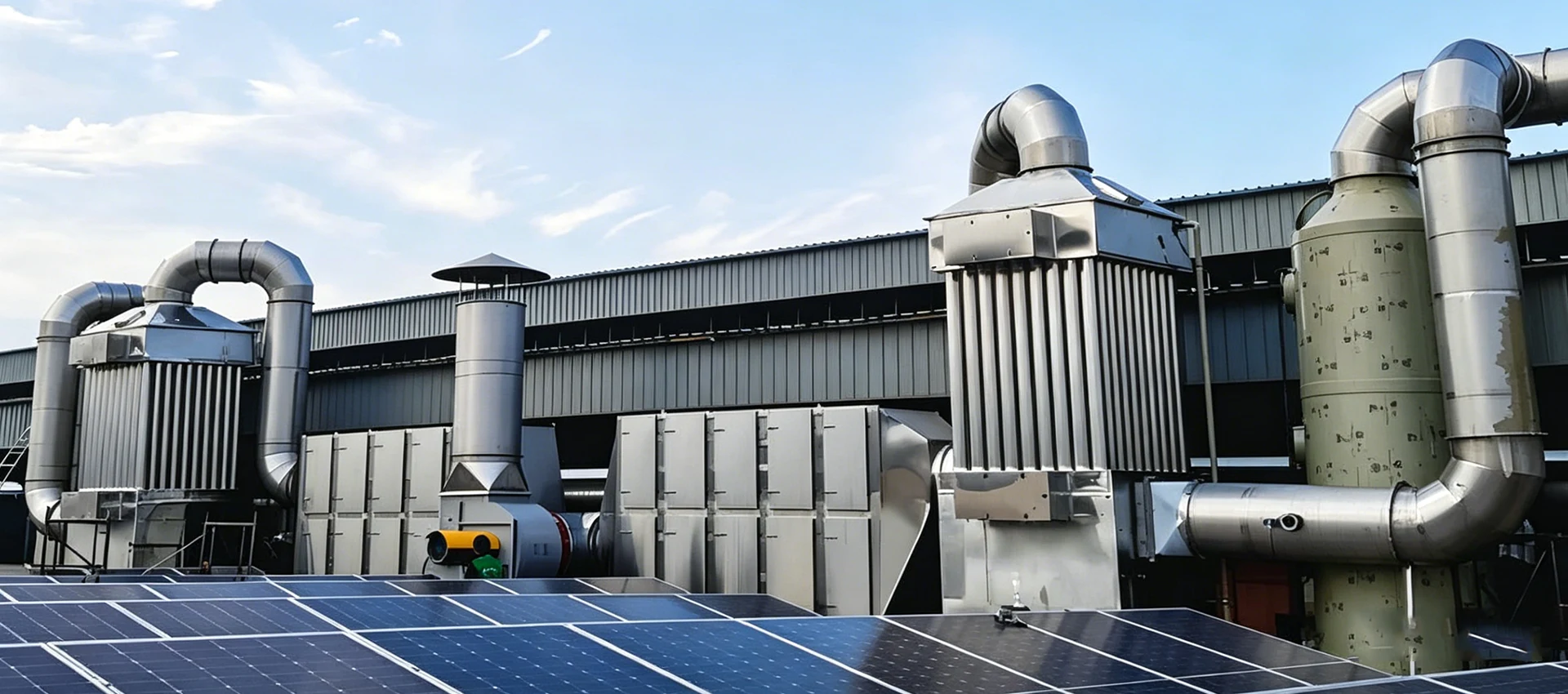
 Industrial VOC Treatment: A Practical Guide to Methods, System Selection and Cost
There is no universal “best” industrial VOC treatment method. The right system depends on the actual exhaust stream: airflow, VOC concentration and mass loading, chemical composition, temperature, humidity, particulate or acid-mist content, operating schedule, safety constraints and the emission limit in the facility’s permit. Thermal and catalytic oxidizers destroy VOCs; activated carbon and zeolite systems capture them; condensers recover suitable compounds; wet scrubbers absorb soluble gases; and plasma or biological systems may suit selected low-concentration or odor-driven applications. Complex exhaust normally needs a treatment train rather than one device.
 07 2026-08
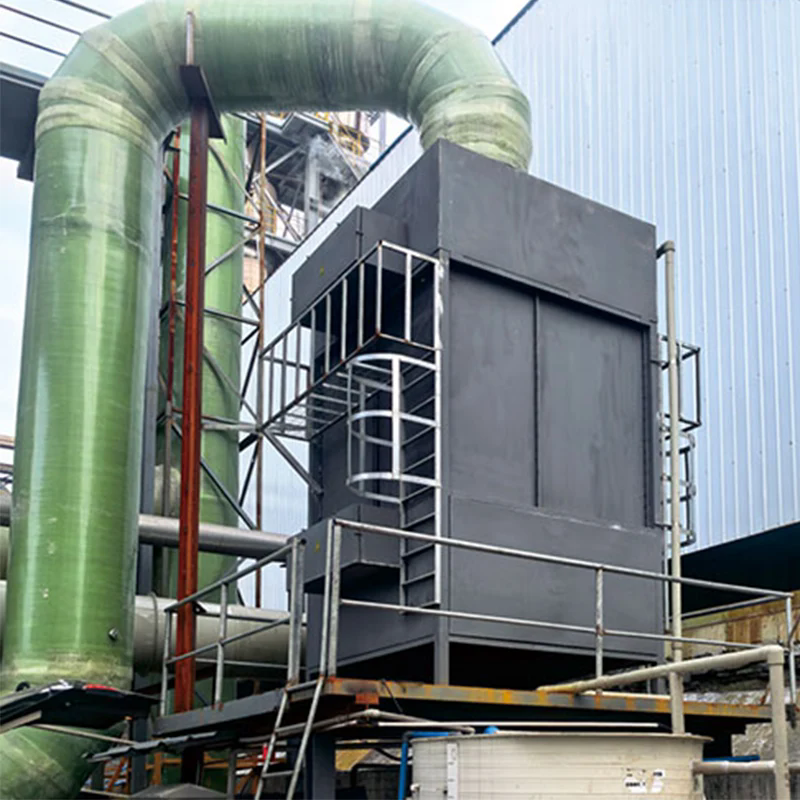
 How Does Waste Gas Treatment Equipment Improve Industrial Air Quality and Environmental Compliance?
Industrial production processes often generate waste gases containing harmful pollutants, odors, volatile organic compounds (VOCs), dust particles, and other contaminants. Without proper treatment, these emissions can negatively affect employee health, surrounding communities, and environmental sustainability. Waste Gas Treatment Equipment provides an effective solution by capturing, filtering, and transforming harmful gases into safer substances before they are released into the atmosphere.