Intelligent Purification Power Supply and Control System Assembly
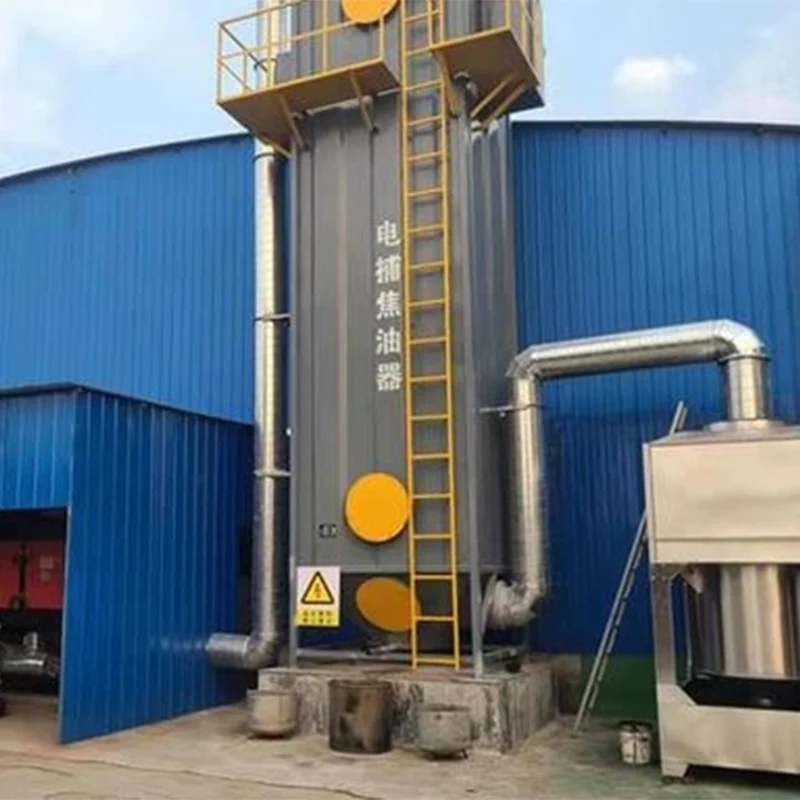
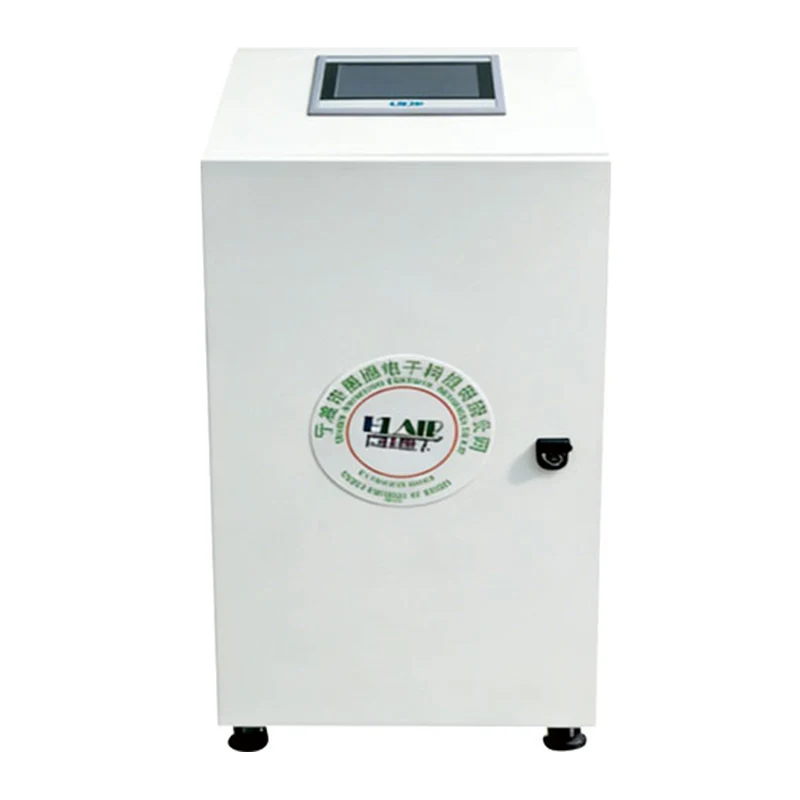
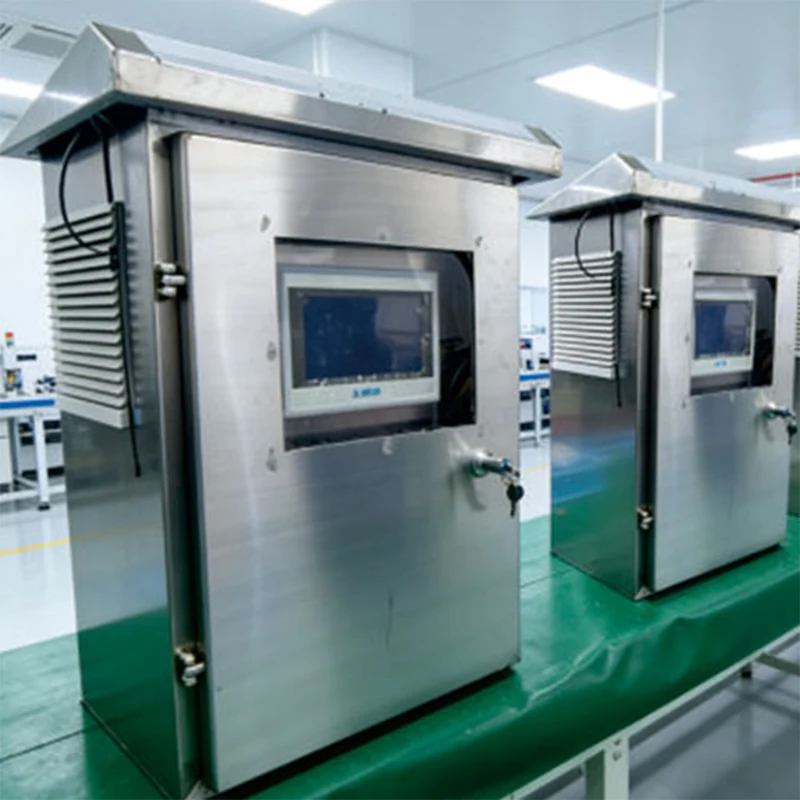
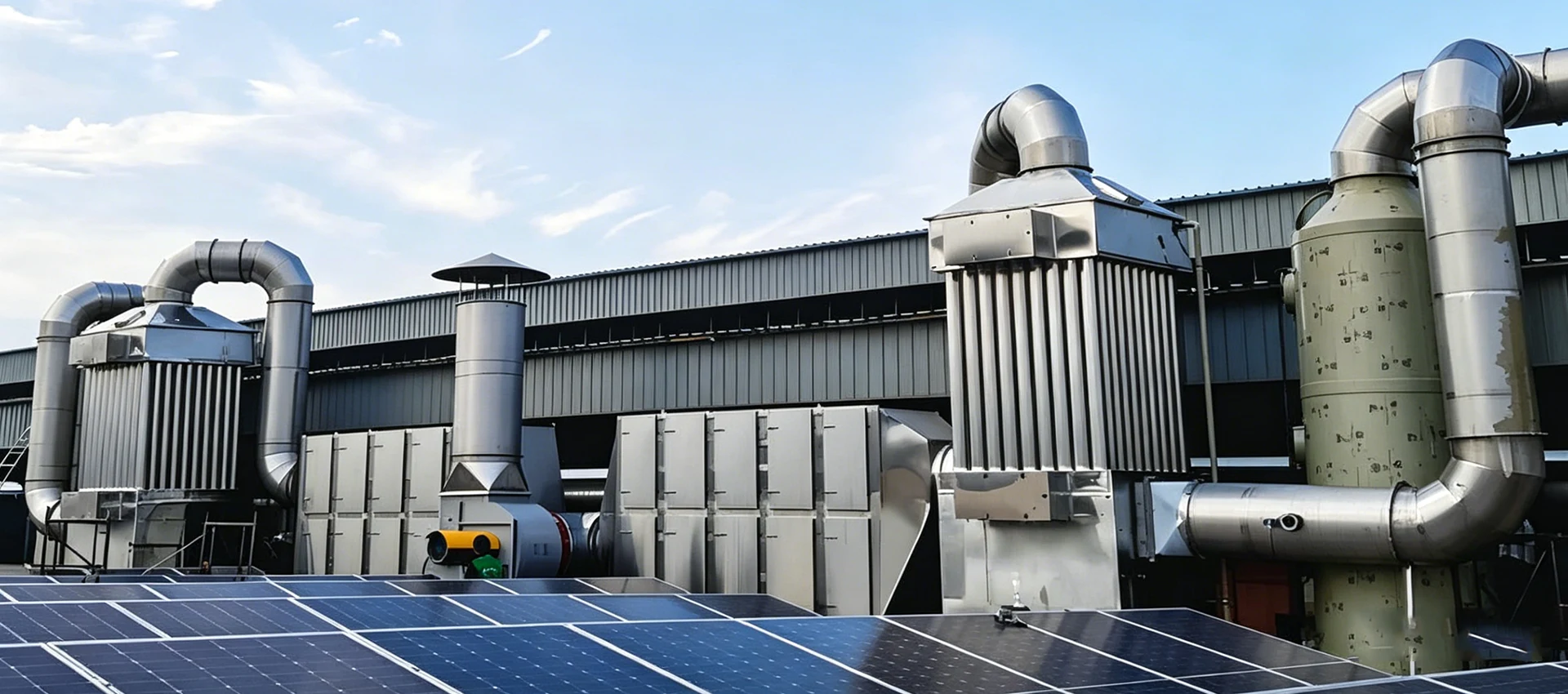
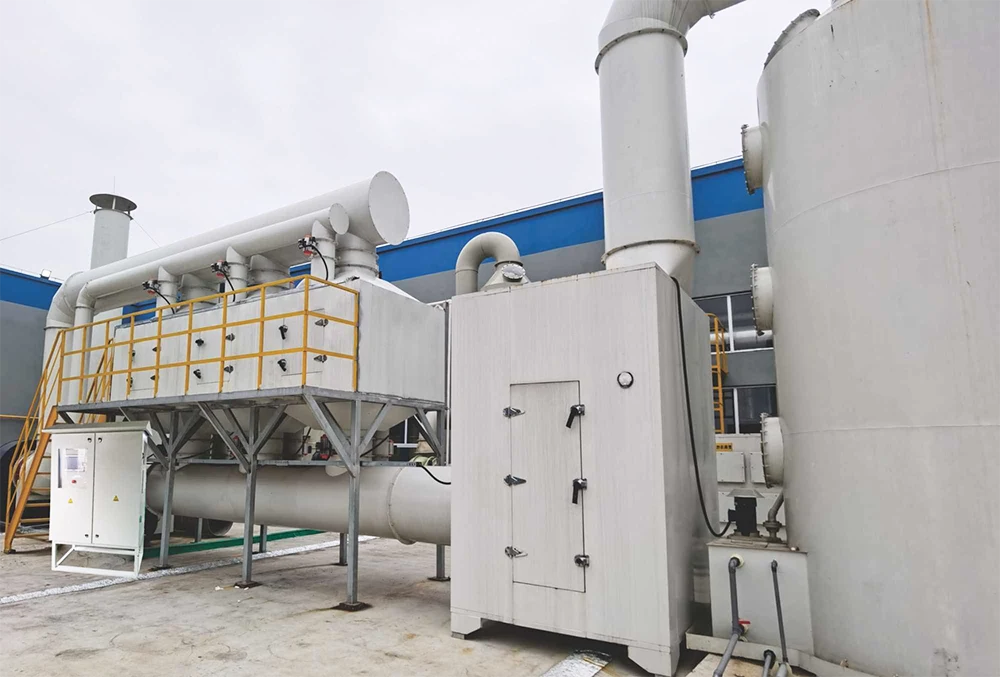
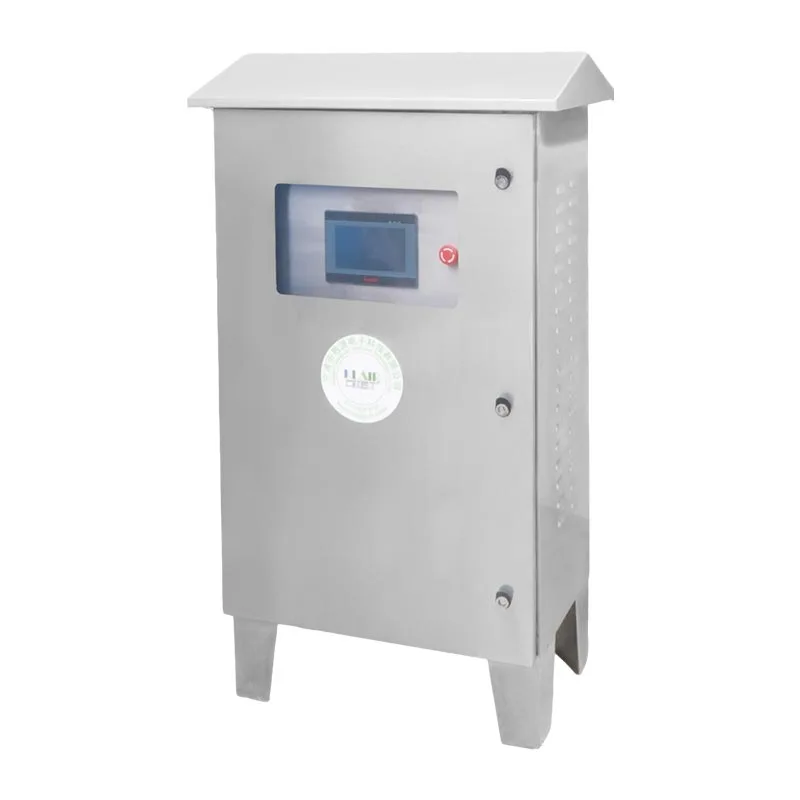
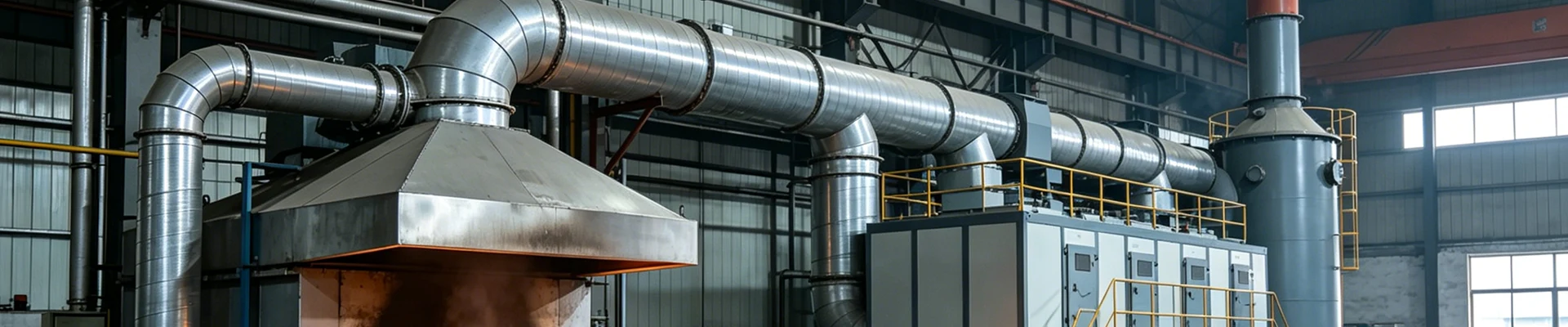
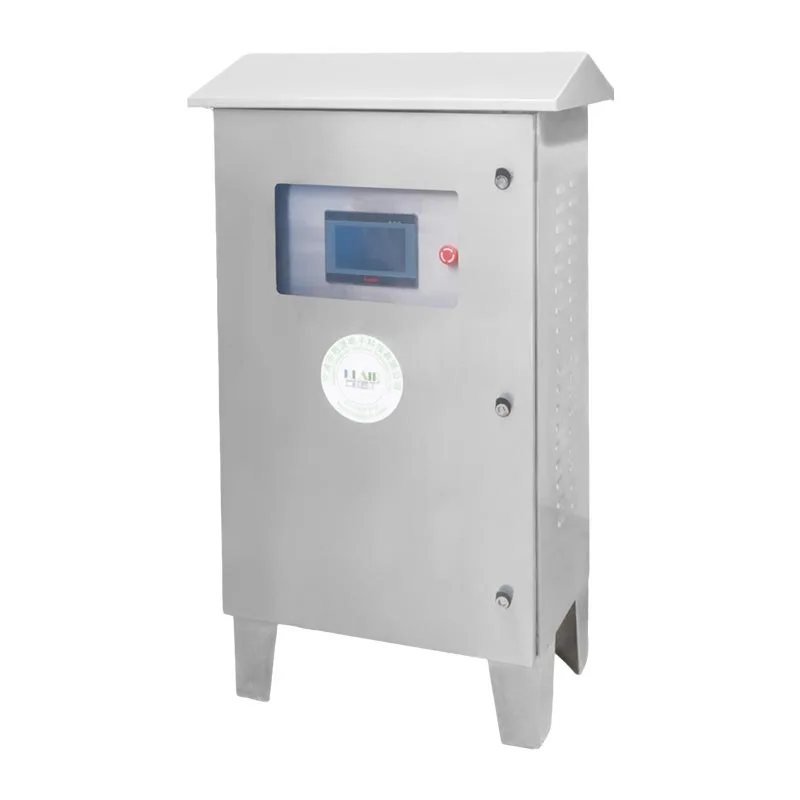
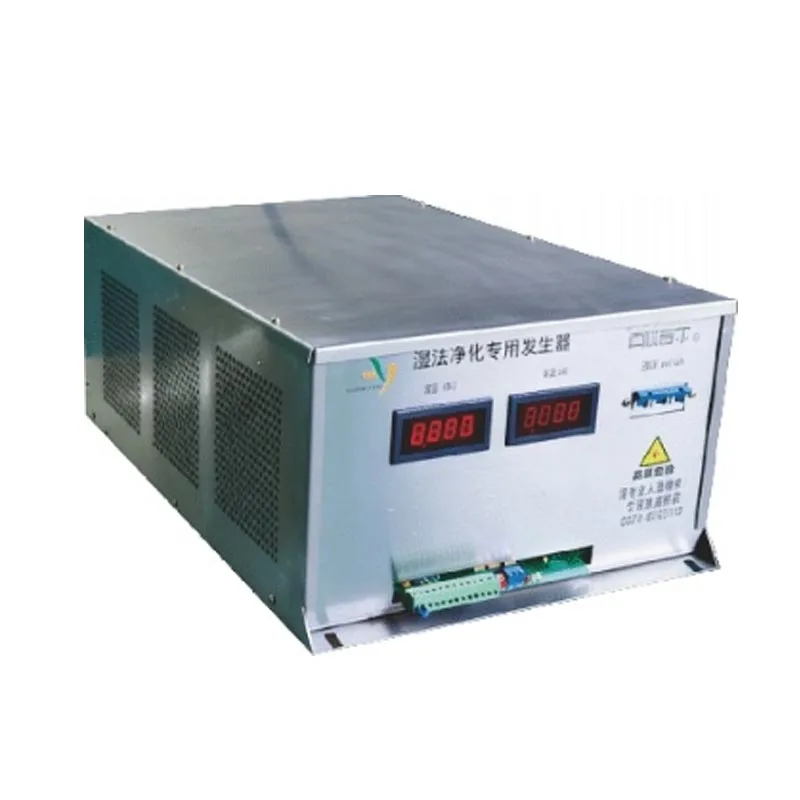
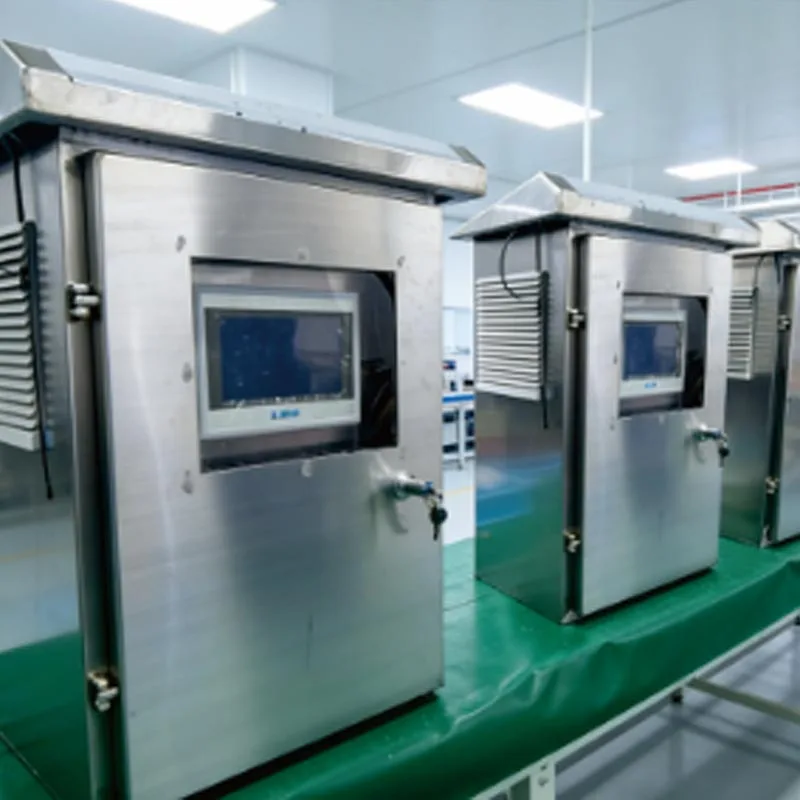
Shengyuan Technology DeFa Intelligent Purification Power Supply and Control System Assembly is an integrated platform designed for industrial waste gas treatment equipment. Combining a high-frequency high-voltage generator, Siemens PLC control, multi-level safety protection, IoT remote monitoring, and auxiliary equipment management, it provides stable power supply, intelligent operation, and safer control for electrostatic, plasma, VOC purification, and odor treatment systems.
The DeFa Intelligent Purification Power Supply and Control System Assembly is an integrated control and power supply platform launched by Shengyuan Technology for industrial waste gas treatment projects. It highly integrates a high-frequency, high-voltage generator, a Siemens PLC intelligent control unit, multi-layered safety protection logic, IoT remote control capabilities, and management interfaces for auxiliary equipment. The system delivers reliable, intelligent, and safe power supply and operational management for electrostatic, plasma, and hybrid purification equipment. It is designed to simplify installation and maintenance, reduce reliance on manual labor, and eliminate operational risks at the source through proactive safety mechanisms.
Core Architecture and Functional Modules
1. Integrated high-frequency, high-voltage generator
Features a compact, fully functional, integrated high-frequency design. Compared to traditional line-frequency power supplies, the high-frequency output significantly increases the number of effective discharges per cycle, boosting purification efficiency by over 10%. All operating parameters are set and managed by a PLC program, enabling "plug-and-play" startup: factory-preset parameters eliminate the need for repeated on-site tuning by specialized engineers. During operation, the system automatically adjusts output characteristics based on real-time conditions, preventing frequent shutdowns caused by operational fluctuations and ensuring continuous, stable equipment performance.
2. Siemens PLC Intelligent Control Core
Centered on a Siemens PLC, the Intelligent Purification Power Supply and Control System Assembly incorporates control algorithms optimized by Shengyuan Technology based on two decades of engineering data. All system functions—ranging from high-voltage output, fan speed regulation, and cleaning sequences to safety interlocks—are integrated into a unified control logic. The system offers dual operating modes (automatic and manual): in automatic mode, flexible control technology allows the generator to adapt to complex, fluctuating flue gas conditions; in manual mode, maintenance personnel can make precise adjustments based on on-site requirements. System logs automatically record every parameter change and operational event, facilitating traceability and diagnostics.
3. Three-Tier Active Fire Protection System
Safety is the guiding principle of the DeFa control assembly design; the system establishes a three-tier fire prevention and protection mechanism operating from the outside in:
Tier 1 Protection—Front-end Hazard Detection: When spark detection sensors installed in the inlet duct detect sparks or high-temperature particles in the flue gas, the PLC immediately triggers a system shutdown and can activate fire sprinklers or shut-off valves, halting the hazard before it reaches the equipment.
Tier 2 Protection—Program Logic Protection: Using preset thresholds for current, temperature, and pressure fluctuations, the system continuously monitors for abnormal discharge or trends of localized overheating. If a threshold is triggered, the system automatically reduces output power or cuts off high voltage to prevent potential hazards from escalating into open flames.
Tier 3 Protection—Generator Self-Safety Monitoring: The high-voltage generator performs real-time self-checks for arcing, short circuits, and overloads during both startup and operation. If any operating parameter deviates from the safe range, the generator immediately cuts off output and reports a fault; operation can only resume once conditions return to normal and the system confirms the status.
Multiple protective measures ensure the equipment is controlled before a fire can even start, making it particularly suitable for treating industrial exhaust gases containing combustible components.
4. IoT and Multi-Point Control System
The Intelligent Purification Power Supply and Control System Assembly comes standard with an IoT communication interface, supporting various remote management methods:
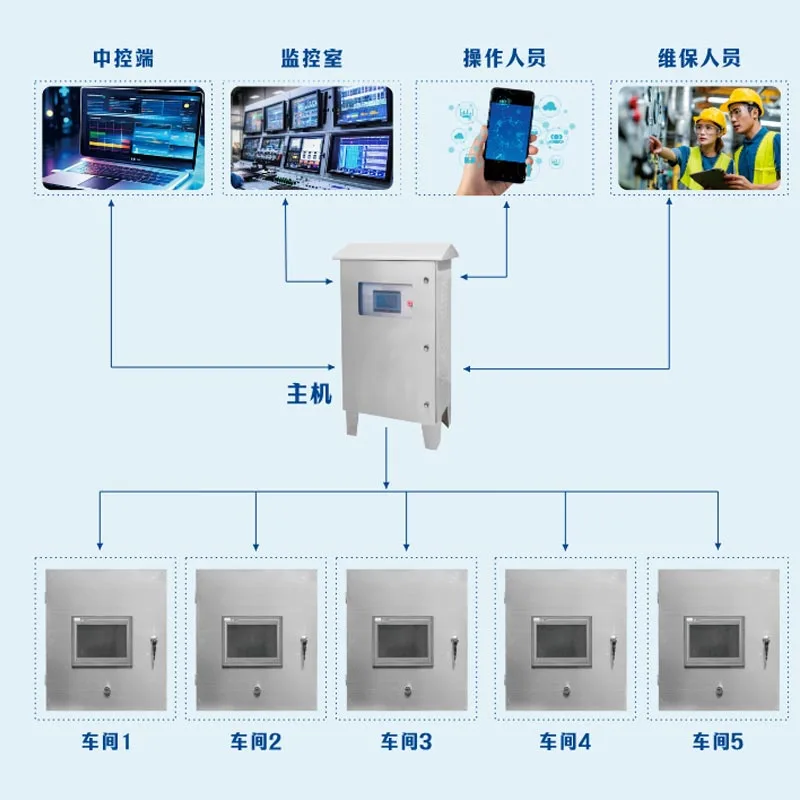
• Remote App Control: Users can monitor equipment status, receive fault alarms, and perform power-on/off or parameter adjustments anytime, anywhere via a mobile app, significantly reducing routine inspection costs.
• Centralized Management (HMI/Central Control Room): Features fiber-optic or Ethernet interfaces for seamless integration with factory DCS or central control rooms, enabling centralized monitoring and data logging for multiple purification units.
• Multi-Point/Split-Screen Control: For large-scale sites, additional control screens can be installed; these communicate with the main control cabinet via Ethernet or fiber optics, allowing for local control at different locations with real-time information synchronization across screens.
• Remote Synchronized Start/Stop: Supports signal interlocking with associated equipment (such as production line fans) to synchronize the purification system with the production process, thereby avoiding energy waste during idle operation.
5. Auxiliary Equipment Control and One-Touch O&M
The system integrates control interfaces for auxiliary equipment—such as fans, cleaning pumps, and spray towers—eliminating the need for additional control cabinets:
• Fan Control: Provides outputs for fan start/stop and speed regulation; fan speed can be adjusted via the touchscreen or remotely, and start/stop logic is integrated into the safety interlock system.
• Automatic Cleaning Function: The cleaning pump supports scheduled cleaning and duration settings; in conditions prone to fouling (e.g., high dust or oil mist), this effectively reduces the frequency of manual cleaning and maintains stable purification efficiency.
• Linked Outputs (e.g., Spray Towers): Includes reserved dry contact outputs to link with external equipment like spray towers and valves, enabling logical coordination across the entire treatment system.
• One-Touch System Control: Users simply press a single start button, and the system activates the generator, fan, cleaning units, and other equipment in the preset sequence; shutdown is similarly performed with one touch, avoiding complex multi-step procedures and the risk of operational errors. Cleaning and maintenance tasks can also be executed automatically via a single-command input.
Overview of System Functional Interfaces
| Functional Interfaces | Features |
| High-frequency, high-voltage generator | Integrated design; no commissioning required; flexible output control |
| Intelligent PLC control program | Siemens PLC core; all functions integrated into the control logic |
| Three-level fire protection | Three-level protection: primary external interlock, secondary programmed threshold protection, and tertiary generator self-diagnosis |
| Remote app control | Operations, status monitoring, troubleshooting, and power control |
| Host computer/central control interface | Fiber optic/Ethernet support for centralized management |
| Multi-point split-screen control | Ethernet/fiber optic communication; supports local control from multiple locations |
| One-touch system-wide start/stop | One-touch startup, shutdown, and cleaning |
| Remote synchronized start/stop | Interlocks with external systems for synchronized operation |
| Fan start/stop and speed control | 1 set; adjustable via interface or remote control |
| Cleaning water pump control | Scheduled cleaning with configurable timing |
| Spray tower linkage output | 1 set; integrated into control logic |
| Automatic/manual parameter modes | Adaptable to complex operating conditions |
| System logs | Parameter and operation logging for easy traceability |
| Purification efficiency enhancement | High-frequency output; >10% increase over standard line frequency |
| System integration level | Built-in frequency converter and control unit; no separate control cabinet required |
Typical Application Scenarios
● Industrial VOC purification systems (electrostatic/plasma)
● Commercial kitchen fume purification projects
● Odor control projects
● Treatment of complex exhaust streams containing oil mist, acid mist, and particulates
● Support, retrofitting, and upgrading of medium-to-large-scale environmental protection equipment
FAQ
Can this system directly drive electrostatic or plasma purification equipment?
Yes. The system features a built-in high-frequency, high-voltage generator designed specifically for applications such as electrostatic precipitation and dielectric barrier discharge; output parameters can be flexibly matched via programming to various models of purification electric fields or plasma reactors. We also offer parameter adaptation services to meet specific load requirements.
Is it true that the high-voltage generator requires no on-site commissioning?
Yes. The generator comes pre-loaded with optimized baseline parameters based on extensive engineering experience; the system operates automatically once the load and power supply are correctly connected on-site. It dynamically adjusts based on fluctuations in flue gas temperature, humidity, and concentration, eliminating the need for the frequent manual parameter adjustments required by traditional equipment. Manual mode—and subsequent fine-tuning—is only necessary for highly unusual operating conditions or specific user-initiated adjustments.
How reliable is the three-level fire protection system?
The three-level protection mechanism forms a closed loop, ranging from external hazard detection and internal trend analysis to component-level self-checks. Level 1 protection uses physical sensors to detect sparks directly; Level 2 relies on safety thresholds monitored via high-speed PLC scanning; and Level 3 consists of hardware-level protection within the high-voltage power supply itself. This layered architecture has been validated across hundreds of industrial projects, effectively mitigating risks associated with treating waste gas containing combustible components.
How is the security of remote control ensured?
The system utilizes industrial-grade communication protocols with encrypted data transmission and tiered management of remote operation privileges. Critical functions—such as emergency stops and safety interlocks—operate independently of the communication link, ensuring that local safety logic remains effective even if remote communication is interrupted. We recommend using remote functions for monitoring and routine start/stop operations, while prioritizing local logic for all safety-critical actions.
Can it interface with our existing central control system?
Yes. The system provides standard Ethernet and fiber-optic interfaces and supports industrial protocols like Modbus TCP, facilitating integration with DCS, SCADA, or third-party central control platforms. Our technical team can evaluate and develop custom solutions if specific protocols are required.
What happens if the system malfunctions when no professional personnel are on-site?
The system includes a built-in self-diagnostic function; the display screen clearly shows fault codes and descriptions, while the remote app simultaneously pushes alarm notifications. Shengyuan Technology’s technical support team utilizes remote access capabilities to directly analyze system logs and real-time parameters, guiding on-site personnel through troubleshooting; consequently, most issues can be resolved without the need for an on-site visit by a specialist.
Manufacturer Technical Background
Shengyuan Technology (DeFa brand) possesses over two decades of technical expertise in environmental remediation and air purification, specializing in the R&D and manufacturing of high-voltage power supplies, plasma applications, and intelligent control systems. Our core competencies span areas such as high-power electrostatic units, VOC abatement, and odor control, with products serving markets across North America, Western Europe, and Southeast Asia. Built upon engineering data-driven algorithms and designed with a focus on stability and safety, DeFa control systems are dedicated to providing reliable core control and power supply solutions to environmental equipment integrators worldwide.
Hot Tags: Intelligent Purification Power Supply Manufacturer, Purification Power Supply and Control System Supplier, Power Supply Control System Assembly Wholesale
Send Inquiry
Contact Info
-
Address
No. 661 Cangchu Road, Jiangbei District, Ningbo City,ZHEJIANG PROVINCE,CHINA
-
Tel
-
Email
For inquiries about our products or pricelist, please leave your email to us and we will be in touch within 24 hours.